American Debt Crisis: Whatever Happened to Jobs, Jobs, Jobs?

No. 2 in a series of quick-takes on the Debt Crisis of 2011. 

Today’s question: Whatever happened to the first and foremost issue of the 2010 election, JOBS?

Remember when every politician was chanting in unison: “Jobs, jobs, jobs!” That’s what they said, because that’s what the voters cared about. Jobs. But “Jobs, jobs, jobs!” was more a prayer than a promise.

All politics is local, remember, but the job market is now global. It is not within the power of locally elected politicians to create jobs in a global job market.

It is, however, within the power of politicians to kill jobs. Soon as the class of 2010 took residence in the governor’s mansions and state legislatures, they set about writing austerity budgets focused on two goals: Reduce spending and cut taxes. The way to reduce spending is to eliminate as many state programs and state jobs as possible. Wisconsin got the lion’s share of publicity for austerity, but nearly every state has joined the movement.

Now the focus has turned to Washington, where they’re busy cutting jobs on a larger scale. The debate is not over whether to cut the federal budget, but how deeply to cut. And where to cut.

The Republican Party is determined to cut the budget by gutting the hated “Entitlement Programs.”  They use the words, “Entitlement Programs” because they fear to say, “Medicare, Medicaid, and Social Security.”  The main budget target this year is Medicare for the elderly. Republicans hope, as soon as possible, to move on to cutting Medicaid and the most popular “Entitlement,” Social Security.

Keep your eye on the goal. Forget about Jobs, jobs, jobs! The attention span is short. Jobs, Jobs, Jobs! is over. That was last year’s goal.

The goal for 2011 is reducing the national debt. So they say. Spending cuts are the means to that end.

But the real goal is to reduce taxes for wealthy individuals and for corporations. Republicans plan to hand over to the wealthy and corporations, all the money saved by spending cuts. In a few years, presumably, Congress would begin to use some of the savings to actually reduce the debt. Possibly.

When pressed, Republicans say that the way to create Jobs, jobs, jobs! is by gifting large amounts of money to the wealthy and corporations, who would invest the money. Eventually, it might trickle down to the masses in the form of jobs.

Remember that wealthy people invest their money in corporations. As in,  “International Corporation” Or “Global Corporation.” So, even if you believe in trickle down, exactly where in the world do you suppose new jobs would be created?

In my opinion, any jobs resulting from U.S. spending and tax cuts would go to some developing  country offering cheap labor, far from the U.S.

America with no jobs and no Medicare will be a sad and dreary place.

The first post in this series on the American Debt Crisis is here. The next installment will be “Starve The Beast.”

— John Hayden

(Does a 525-word post qualify as a short-take?)

Geography of Life After Sixty: You Do Have A Choice

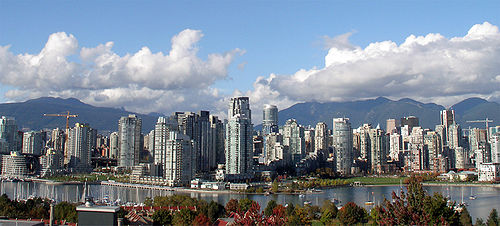
VANCOUVER, BEST CITY FOUR YEARS RUNNING. Wikimedia Commons photo

MELBOURNE SKYLINE. AUSTRALIA HAS FOUR OF THE WORLDS TOP CITIES. Wikimedia Commons photo

We haven’t talked about geography in a while. Have you ever thought about relocating to a better place?

Like, “If Congress is stupid enough to kill Medicare, I’m moving to Canada!”

If you’re retired and living on Social Security, you might actually have the freedom to make a considered decision about the best place for you, personally.

Her Majesty Elizabeth II, Queen of the Commonwealth, must be doing something right. Public domain photo

Turns out, Canada’s not a bad choice. In Time’s list of the 10 Happiest Countries in the World, Canada comes in third, behind only Denmark and Sweden. Australia is fourth and New Zealand is eighth. These Commonwealth countries must have a secret. Could it be their health care systems? Ireland, my favorite place to consider living, is 10th. Come to think of it, I guess all the countries in the top  10 have universal health care. The U.S. does pretty well, at 12th place, considering we have health care that’s more expensive and less effective than many countries.

In a ranking of the Most Livable Cities in the World, Australia has four(!) in the top 10 and Canada has three. Vancouver, Canada (most livable city in the world four years in a row!), and Melbourne, Australia took first and second place. If you’re gazing north across the border, Calgary and Toronto also make the top 10. Pittsburgh(!) is the top-ranked U.S. city, at 28th.

Gazing south across the border? Dunno. People used to retire to Mexico for the low cost-of-living. But I hear they’ve got an out-of-control drug war going just now.

As always, these rankings of places are subjective. You have to consider what factors were considered in the rankings. What’s important to you? Health care? Cost of living? Climate?

— John Hayden

(Quick-take rating for this post: 342 words)

American Debt Crisis: A Cinder-Block Wall, Or A Screen Door?

No. 1 in a series on the Debt Crisis of 2011.

The American political deadlock over debt and taxes is an enigma. It’s a monster with too many heads. Starting today, I’m doing a series of blogging quick takes, each post only a few sentences, zeroing in on one question. No more windy dissertations.

Today’s question: Is the world as we know it about to end, if Democrats and Republicans can’t agree to raise the debt ceiling?

The sovereign debts of the U.S. and other countries are huge beyond comprehension. But what is their real import? In the 1980s, when “fiscally responsible” Republicans were digging the debt hole, they decreed that deficits no longer matter. Could that possibly be true?

Is the debt crisis being trumped-up for ideological purposes, to kill Medicare, or Social Security?

To be sure, debt exists on paper, as bonds and notes and bookkeeping entries. But what, if anything, does the paper represent? Is national debt a tangible reality, like wood; or an abstract concept, light as air?

Better check under the bed. Is anyone hiding there?

Remember Y2K? End of the world. Planes were going to fall from the sky. Approaching Y2K, it looked like a cinder-block wall, into which civilization was going to crash and burn.

Arriving at Y2K, we passed through it like air through a screen door.

— John Hayden

(Quick-take rating for this post: 215 words.)

Government Shutdown Feels Like Beginning Of The End For America

Human beings have created many empires in recorded history. Every one of them, from the Roman Empire, to the Ottoman Empire, to the British Empire, on which the sun never set — every great empire has failed.

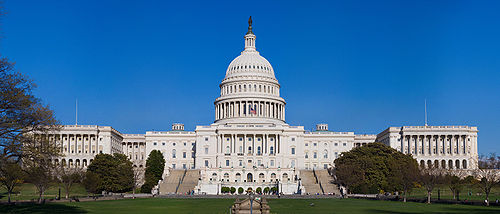
And here we have the U.S. House of Representatives and the U.S. Senate on the brink of shutting down the government of the United States of America — ON PURPOSE!  If there were any logic, any sense in the world, closing the U.S. government would be treason.

Last time politicians shut down the government, in 1995, it was able to reopen in a few days with no more serious consequence than closing a few national parks.

However, there is no guarantee for the future.  The law of unintended consequences is in effect. We live in the 21st century, the century of the “Black Swan.” Major events, or chains of events, that are unpredictable and highly improbable can happen. You can learn more about the “Black Swan” here.

Politicians who would shut the U.S. government — on purpose! — are tempting fate. Our ancestors fought a Revolutionary War to establish this government. We fought a Civil War to hold the Union together. American soldiers died in foreign wars. And now modern politicians are willing risk throwing it all away over a budgetary dispute? Whatever the unintended consequences, Republicans and Democrats will share the dishonor equally.

We live in perilous times. The U.S. is embroiled in three foreign wars. We recently survived the worst worldwide financial crisis since the Great Depression, but many countries continue to struggle with economic and debt problems of dangerous proportions. Portugal is begging for a bailout by the European Union and the International Monetary Fund. Portugal is the third European nation to require financial rescue. Japan, after two lost decades of economic stagnation, has been driven to its knees by an epic earthquake. Its nuclear power plants spew radiation, poisoning Japan’s food and water.

Enemies wish to destroy us. We’re threatened by terrorists from abroad, and by homegrown terrorists. War might be unleashed at any time, in Yemen, or the Ivory Coast, or an attack from North Korea or Iran. India and Pakistan are always on the verge of war. So are the Israelis and Palestinians.

What’s my point? Events like a government shutdown can spin out of control. One unexpected consequence cascades into others, until the entire edifice trembles. Who could have predicted that a World Trade Center building might collapse? Both towers disappeared into rubble before lunch on a single day.

On top of all the dangers in the world, U.S. politicians are going to shut down the U.S. Government? For a few days? If politicians cannot agree to keep the government open this week, will they agree to reopen it next week? What if two weeks go by? Three? The longer the crisis continues, the more difficult it will be to end. Be afraid of the “Black Swan.”

Some remnant remains after an empire fails. Rome exists as a city to this day. The British islands remain a functioning nation, with shrunken power. The Mayan civilization left ruins. Descendants of the Mayan people live today throughout Central America.

North America will remain, and millions of people will live in the historical United States. Modern civilization will continue, probably. Beyond that, there are no guarantees for the U.S. as a nation. A federal shutdown  for more than a few weeks would force the states to fend for themselves. A shutdown could lead to default on the sovereign debt, or weakening of U.S. armed forces.

Once started, a process of devolution and decay may accelerate out of control, and who has power to stop the chaos?

— John Hayden

Last Stand of the White Men in Suits

HOUSE REPUBLICAN LEADERS. AP photo, 02-09-11

Not to belabor the obvious, but does the above photo look like the last stand of Republican white men in suits?

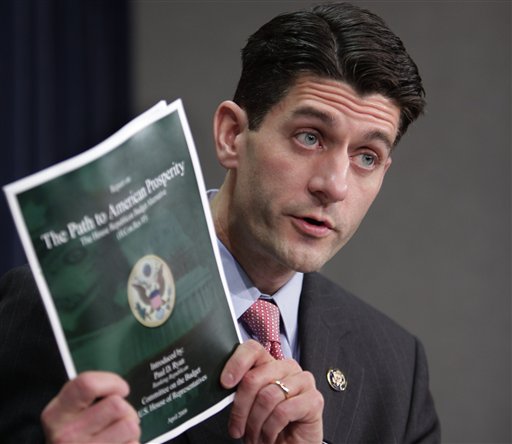
REP. PAUL RYAN. AP photo by J. Scott Applewhite

This morning, Rep. Paul Ryan, chairman of the House Budget Committee, presented the Republican budget for 2012. Joining him were a TV screen full of his Republican colleagues on the House Budget Committee. Everyone present, from what I could see on TV, was a white man. With a few exceptions, they are from the Red States, the heartland of America.

Not to put too fine a point on it, but the Republican budget would cut government spending by $6.2 trillion over a decade, and sharply cut taxes for the wealthy. The top income tax rate would be reduced from 35 percent to 25 percent. Is the U.S. really broke, or is the U.S. wealthy? You decide.

Here is a list of Republican members of the House Budget Committee. White men in suits from the heartland. Only one female name is on the list.

Many believe the Republican budget is so draconian that it's dead on arrival. I hope so, but the hard line on Medicare, especially, is ominous.

NOT TO IGNORE THE REPUBLICANS IN THE SENATE. Roger L. Wollenberg photo, 03-31-11

Umm, the photos above, of Republican leaders in the House and Senate, and the list of Republicans on the House Budget Committee . . . Is this what democracy looks like in America, in 2011? (Disclaimer: Many of my friends and relatives are white men. Come to think of it, I am a white man. Hey, I even own two winter suits AND two summer suits, so I am prepared to attend weddings, funerals, and job interviews in all seasons.)

The name of the Republican budget is “Path to Prosperity.” Rep. Ryan says these words, “Path to Prosperity,” with a straight face, without a hint of irony.

Here’s an early analysis of the Republican budget numbers, from the Huffington Post.

Here’s another analysis by Ezra Klein in the Washington Post.

The “Path to Prosperity” runs right over Medicare and Medicaid. At this moment, it appears to me that the Path to Prosperity would effectively destroy Medicare and Medicaid. Maybe that is a  good thing. Sometimes, I think, the only way to reform a program or a bureaucracy is to destroy it and start over. But I don’t think that’s what Republicans have in mind. I think Republicans intend to privatize health care for the elderly and the poor. In the name of paying off the debt. (For an earlier post on Republican strategy regarding Social Security, see “Divide and Conquer.”)

Also on the Republican chopping block: education, from Head Start to Pell Grants.

I think Republicans are focused entirely on two things: paying off the public debt, and reducing taxes. Two contradictory goals, but possibly both can be accomplished at the same time, by grinding the middle class and the poor — and the elderly — into the dirt. (Go ahead, accuse me of class warfare. Doesn’t this look like a scorched-earth policy to benefit wealthy America and corporate America?)

Rep. Paul Ryan says the Republican budget will “create jobs.”

SHOW ME THE JOBS. How exactly do you create jobs by slashing spending to the bone, on everything except the Department of Defense?

How do you create jobs when Toyota is shutting down 13 factories in the U.S., and food and gasoline inflation is vacuuming up every spare dollar of discretionary spending? AND the U.S. is fighting three wars in the Middle East.

Oh, yeah. And to show their power, or something, Republicans intend to shut down the U.S. government at the end of the week. Will that create jobs?

— John Hayden

You Decide: How Much Is A Worker Worth? What Is Fair Pay?

Last night, I attended a meeting about social justice issues. Naturally, the controversy about public worker salaries and unions in Wisconsin came up.

One person commented, “The workers in Wisconsin are not poorly paid.” As if that were a known fact.

We all have preconceived notions about how much certain workers are paid. (When we say “public workers,” we’re often thinking of  teachers, firefighters, and police officers. It is important to point out that by the very nature of state and local government, large numbers of the workers are in traditionally low-paying  jobs requiring low levels of skill or education.)  What do you think is fair pay? Please vote.

Which workers are we talking about? Teachers? Police officers? School maintenance workers? School cafeteria workers? Bus drivers? Road repair crews? Attorneys, engineers, accountants? Public health nurses? Truck drivers? Clerks who process paperwork or answer the phone?

Does a police officer deserve to be paid an adequate living wage? Does a trash collector? Should fair pay be enough for the worker to support himself or herself only? Or should the pay be high enough to also support a child? Two children?

Was answering these questions difficult, impossible, easy? Who should set pay rates? The governor, the private market, the unions, collective bargaining, lottery? Put them all  on the ballot for the voters to decide in a referendum?

How much should bloggers be paid? What? Never mind!

John Hayden

Political Zeitgeist In America

Is there any political reality remaining in America? I’ve been trying to make sense of the political zeitgeist following the election of 2010. Two contradictory perspectives came into focus this week.

Vice President Joe Biden summed up the message from the electorate on “Meet the Press.” Voters want elected officials of both parties to work together and compromise, Mr. Biden said.

MICHELLE RHEE. -- Wikimedia Commons public domain photo

Michelle Rhee, an education reformer who used to be chancellor of D.C. public schools, stated a different position in “Newsweek.”

“I don’t think consensus can  be the goal.” said Ms. Rhee. And: “We can’t shy away from conflict.”

That’s the tension in American democracy — longing for peace and compromise on one hand; and an appetite for political conflict on the other. Voters who are comfortable with the status quo yearn for politics without conflict. They see reformers as troublemakers.

Reformers seeking change are impatient with compromise. They’re willing to tolerate a degree of political unpleasantness to achieve a goal. Compromise usually doesn’t bring them closer to the goal. Compromise simply kicks the problem down the road for a year or three.


THE AMERICAN ELECTORATE IS NOT ONLY POLARIZED AT THE EXTREMES. THE INDEPENDENTS IN THE MIDDLE HAVE LITTLE USE FOR EITHER SIDE. Wikimedia Commons public domain image.

It’s human nature to seek the easiest path, to avoid pain and sacrifice. So it’s not surprising that a majority wants compromise. That’s what happened this week, when President Obama crafted an agreement with Senate Republicans to extend current tax cuts for the wealthy, and at the same time extend unemployment compensation for the poor.

The tax-cut compromise is the easy path. It avoids pain all around. But it also adds billions to the national debt. The majority of voters got what they wanted, a minimum of conflict. They are pleased to kick difficult decisions about the national debt and economic austerity down the road.

Americans seem to be dangerously addicted to the easy path. European nations are engaged in national debates (often in the streets) over austerity measures to address their debt problems. America is falling behind on debt, just as we are falling behind in economic competitiveness.

Most troubling of all is that America has fallen way behind other advanced countries in education. Michelle Rhee knows about the public schools:

“The truth is that despite a handful of successful reforms, the state of American education is pitiful, and getting worse.”

If we’re not competitive on education, we won’t have a chance to be competitive economically. And the American electorate complacently ignores the education crisis. In fact, state and local governments are preparing to cut deeply into funding for education, in order to balance government budgets.

Ms. Rhee is quite forthright about the political path to improving education in America. And it’s definitely not the easy path.

“Public school reform is the civil-rights issue of our generation. Well, during the civil-rights movement, they didn’t work everything out by sitting down collaboratively and compromising. Conflict was necessary in order to move the agenda forward. There are some fundamental disagreements that exist right now about what kind of progress is possible and what strategies will be most effective. Right now, what we need to do is fight.”

Any questions? Yes, political conflict is necessary for problem-solving and progress. In some other countries, they resolve political differences through violent conflict. In America, we resolve political differences through elections. Settling our conflicts through civil debate, rather than violence, is the great achievement of democracy in America.

We need to start addressing our political conflicts, not avoiding them. The sooner the better.

— John Hayden

Unemployment and $3 Gasoline in the U.S., Austerity and Street Protests in the Capitals of Europe

BOOK SHIELDS IN ROME. One of many photos circulating in European newspapers and blogs, of protests against government austerity plans. This one shows students in Rome using book-like shields. Tomorrow, you'll likely see similar street theater in London. But only if you have access to European sources.

The beautiful people on CNBC, the Wall Street propaganda channel, chat happily about how high stocks might fly, and the price of gold and oil.  It’s surreal.

Even as they talk, the economy of the Western world is teetering on the edge of chaos. Students protest daily in the capitals of Europe against draconian austerity plans designed to screw the middle class and working class, and especially the younger generations. European governments seem intent on staving off default by cutting deeply into funding for education, arts and humanities. As you can see, ConsterNation is an international state of mind.

You need direct European sources to keep up with events over there. For instance, news and photos of the book protests in Rome can be found at this Italian blog by Italian novelists. If you can read Italian, you could look at their main blog.

Baroque in Hackney reports that students in London will mount a similar protest on Thursday. Ms. B even provides the address where you can go on Tuesday to help make life-sized books for the demonstration, if you happen to be in London. If not, there’s plenty of time to get there by Thursday. It’s a small world, so they tell me.

“With Arts and Humanities a particular target for UK cuts this is a literal display of literary resistance.”  — Ms. B

For more inside information (and videos) from the U.K., you could look at Coalition of Resistance.

Until recently, the U.S. cable channels had been reporting on the debt crises in Greece and Ireland. But as the contagion threatens to spread throughout the southern half of Europe, coverage in the U.S. has all but disappeared. You’ll not likely see film or photos of protests in Europe on CNBC, or any other news channel.

Could the U.S. news blackout on European protests be a conspiracy to keep Americans from knowing the extent of economic turmoil, at least until after the Christmas shopping season? When did I become so cynical? Maybe the news blackout is to prevent protest fever from jumping the Atlantic and infecting U.S. students. Maybe it’s to prevent panic.

Let’s go to the NUMBERS.

Even as the beautiful TV people talk, unemployment in the U.S. is 9.8 percent, officially, and possibly twice that much, in reality. Members of the U.S. Armed Forces are fighting and dying in Afghanistan and Iraq, and for their service they will receive a 1.4 percent pay increase, the lowest in many years. The price of gasoline is $2.97 a gallon, where I live, and more than $3, in urban areas. The snow is knee-deep, or higher, in Buffalo, N.Y.; and the temperature is going down to 30 degrees tonight in Orlando, Florida.

LILY HAS AWESOME POWERS OF CONCENTRATION WHEN A DOG BISCUIT IS BALANCED ON HER NOSE.

And Lily, the golden retriever, has about a one-in-three chance of balancing a dog biscuit on her nose, tossing it in the air, and catching it in her mouth. I had to add the true story about Lily and the dog biscuit for a little comic relief.

No one can predict the future. But let me make a few guesses. The temperature will go up later this week in Florida, and the snow will melt in Buffalo, by late spring.

But across America, it is entirely possible that unemployment will remain above 10 per cent and gasoline will remain above $3. For how long? Forever.

And what will the austerity plan agreed to by the U.S. government and the Wall Street tycoons look like? I will not hazard even a guess.

— John Hayden

“You Say You Want a Revolution?”

A picture is worth a million words. There seems to be a difference of opinion throughout Europe (and in America, too) concerning money, and debt. Also, some mild disagreement about who should pay the price and make the sacrifices, and who should get bailed out.

Schoolgirls link hands to protect a police van during student protests in London. -- Peter Marshall photo.

Baroque in Hackney reports that a younger generation — “The Kids” — is seizing responsibility because their elders are cowed by the powers that be. Ms. B’s post is enlightening. I urge you to read it.

How far will the wealthy elites in Europe and America push the children of the former middle-class? If you want to know which way the wind is blowing, please read this article by Jonathan Jones from The Guardian. Here’s a brief excerpt:

“For this picture tells a lot, very quickly. It tells us the menace of violence is real as anger grows among groups directly afflicted by the coalition’s cuts. Yet it also reveals that most protesters are peaceful, idealistic, with a sense of history and of the gravity of their actions. Most of all it tells us how amazingly young many of them are.

Future historians may well write that the Conservative-Liberal coalition was doomed the day schoolchildren took to the streets to assert their right to a university education.”

People are protesting in the streets in France (Social Security); England (college tuition); Ireland (budget cuts); and the European Union is getting ready to bail out the biggest banks in Greece, Ireland, Portugal, Spain, and maybe Italy. The U.S. already bailed out its bankers, and people protested with their votes.

So this is the way it’s going to be? The rich get richer; the middle-class get screwed?

“You say you want a revolution
Well, you know
We all want to change the world
You tell me that it’s evolution
Well, you know
We all want to change the world
But when you talk about destruction
Don’t you know that you can count me out
Don’t you know it’s gonna be all right
all right, all right

You say you got a real solution
Well, you know
We’d all love to see the plan
You ask me for a contribution
Well, you know
We’re doing what we can
But when you want money
for people with minds that hate
All I can tell is brother you have to wait
Don’t you know it’s gonna be all right
all right, all right”

— The Beatles

I’ve written about the consequences of what I would call “capitalism off the hook” before. I didn’t think the reaction in the streets and at the voting places would be so swift or serious.

With apologies to Buffalo Springfield, I don’t think it’s paranoia. I think, “There’s something happening here. What it is ain’t exactly clear.”

Mr. Jones of The Guardian describes what’s happening as follows:

“We can look at this picture and see a mass movement rapidly evolving as a generation goes beyond merely taking to the streets and starts finding a larger meaning in its rebellion, and imposing order in new ways. What these girls are showing us is that this is not just about rage. It is a defiant stand for youth and hope.”

Do you think President Barack Obama and Fed Chairman Ben Bernanke understand what’s happening?

“The Kids” and their “cowed” parents understand that they’re being screwed. Government leaders understand the consequences of tax cuts for the rich and budget cuts for the poor.

The wealthy elites understand that they’re screwing the poor, and what’s left of the middle-class. The wealthy always believe they have a right to exploit the poor.

So it looks like it’s the Powerful elites against “The Kids.” You can call it “class warfare,” if you want. I’m afraid that the Powerful will make precious few concessions to “The Kids,” at least not without an ugly struggle. How it will play out, no one knows.

— John Hayden

If Alvin Greene Can Win, Maybe We Really Can ‘Take America Back’ (Vote Here)

People with moxie and common sense are starting to climb on board the Alvin Greene Bandwagon To Take America Back. Here’s five reasons to vote for Mr. Greene, courtesy of Huffington Post.

Where is it written that you have to wear thousand-dollar suits, have $400 styled hair, cheat on your wife, AND be bought and paid for by at least one, zillion-dollar international conglomerate, in order to qualify for the U.S. Senate, or, for that matter, governor of South Carolina.

For your convenience and amusement, let’s have a little mock election right here and now.

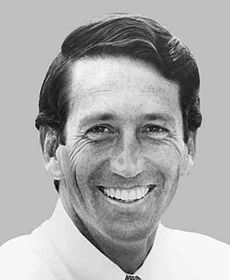
Above top, Mark Sanford (SC), John Edwards (NC); second row, Sarah Palin (Alaska), and Alvin Greene (SC Dem Party photo). (The Sanford, Edwards and Palin photos are from Wikipedia.) Sanford and Edwards are “Establishment.” Palin and Greene are “outsiders” (Ok, Mr. Greene is a new outsider, and Ms. Palin is a veteran outsider.) Sarah Palin represents the Tea Party, and Alvin Greene represents the Mockingbird Party (unless someone comes up with a better name).

Your vote counts! In fact, your vote is the most important vote! No poll tax! All races and  genders welcome to participate. Is this a great and free country, or what?