Blogging On Empty

Monkeys Blogging

Image via Wikipedia

For the first time in more than three years, I’ve hit the blogging wall.

In the past, I’ve taken several purposeful, short breaks from blogging.  But I’ve never lacked the will or the words to write a post.

The political and economic developments this fall — in Greece, France, England, Ireland, and the United States — have left my head spinning. In the din of media coverage, I can’t think of a thing to write that will add insight or bring order out of the chaos.

Here at home, the Austerity Project, the Fitness Project, and my overdue efforts to bring cleanliness and order to this cluttered apartment — all seem painfully slow and inadequate. It feels like wading through a sea of molasses.

I’m temporarily unemployed, looking for change and clarity. At least unemployment is not a crisis, thanks to Social Security.

My head is a muddle, which is normal at this season of the year. Sometimes I  blame it on Seasonal Affective Disorder.  Everything will come into focus after the holidays. There’s nothing here that can’t be fixed by a new year, a new part-time job, or an epiphany.

I’ll snap out of it any day now. In the meantime, I think I’ll take a nap.

— John

Austerity Project, Day 10

ITPB Health Club

Image via Wikipedia

It’s too soon to know whether the Austerity Project will be a success. I’m defining “success” to mean reducing my spending to match my income.

The total damage for Austerity Project, Week No. 1, was $189.13. Issues from Week No. 1: I ate pizza three times. That number has to come down. My biggest single expenditure was a fill-up at the gas station, with regular at $2.76 a gallon, for a total of $33.68. After rent, health insurance, and food, gas for the car is my next highest monthly expense. Soon I’m going to need an oil change and some regular maintenance, which is not included in the monthly budget. And looming in February is the $700 annual payment for car insurance, which is also off-budget.

The first day of Week No. 2 was my first day with no expenditures. Not a penny. Tuesday was $16.23 for miscellaneous household goods at Walmart.

Today, I signed up with a health club, aka “gym,” with a commitment of $19.95 a month for the next year! I did not make this decision lightly. There is no health club line in my monthly budget. I don’t know where the $19.95 a month is coming from. But you have to admit it’s a good price for a health club membership.

With a fancy new health club opening, there’s something of a price war going on among health clubs in my area. I found the $19.95 price at a so-called “bare bones” club. It doesn’t have a sauna or whirlpool or spa. The locker room is small. No towel service. But the place is bright and airy, and they’ve got more equipment than I’ll ever use.

I’m thinking that at age 62, with creakiness in the bones and weakness in the muscles, the health club membership comes close to qualifying as an essential.

It’s not as if I’ve been inactive in the past year. For much of that time, I worked as a security guard, which was mostly walking, walking, walking around a large building and grounds. In other words, my job was to be a moving, human scarecrow. Since August, I’ve spent a lot of time on political campaigning, which also involved lots of walking. I got a sunburn, and then a tan, on my face, but I can’t say I feel any healthier for all the walking. The campaigning resulted in two disappointing losses, first my own in the primary, and then the candidate I volunteered for in the general election.

Now, with the security guard job and the campaign over, and winter coming on, I feel like I’m facing rapid deterioration if I don’t keep these old bones moving. The health club is less than $1 a day, and it will give me another place (in addition to the library) where I can go to get out of the rain and snow.

I’m starting the health club adventure at near rock bottom (I always feel rock bottom this time of year, with the shortening daylight and the sun low in the sky). Job one is to get myself to the health club almost every day. It will be interesting to see if the exercise makes a difference. Any improvement in health of mind and/or body will be well worth the $19.95.

Stay tuned. I’ll keep you posted.

— John Hayden

Austerity Project, Day One

On this first day of November, in the Year of Our Lord 2010, it’s time for me to begin.

After a lifetime of free spending, I’m changing my ways. I’ve never had expensive tastes, and in the past two years, I’ve downsized my lifestyle and focused on simple living.

Now, I have to get really serious. In June, I turned 62, and in August, I received my first Social Security payment, direct-deposited into my checking account. For a variety of reasons, it looks like I’ll never have a middle-class job again. So it’s me and Social Security, and whatever part-time or seasonal work I can find. The rent is covered, and a few other items that I still think of as “necessities.” (Food comes to mind.) But there’s no budget line for “discretionary spending.” There’s no financial margin for error or excess.

Therefore, I will begin today, Nov. 1, 2010, to keep a record of everything I buy, everything I spend, down to the dollar. Hopefully down to the penny. I call it my Austerity Project. I should have done this a long time ago.

I have one of those old-fashioned elementary-school composition books, bright red color, made in India, I forget how much I paid  for it. (See, that’s my problem. I never pay attention to how much I pay for the things I think I need. I need it, so I buy it.)

In this bright-red composition book, I will record every expenditure, every day. On this, the first day of the Austerity Project, I did one load of laundry at the laundromat ($3.25). While waiting for the clothes to dry, I had the off-season special from the Pizza place next door ($4.23, including tax, for two slices and a large Coke). I invested in an eight-pack of budget paper towels, which were on sale at Food Lion ($5.08). I bought a gallon of Turkey Hill iced tea and two bananas at Super Fresh ($3.65).

Total damage for Day One: $16.21.

Today was the last day of the 2010 election campaign, and tomorrow, Election Day, will be a long day volunteering at the polls. So I knew these first two days of the project were going to be hard on the budget. Tomorrow, I’ll probably grab a quick lunch at McDonald’s or someplace. The polls are open 7 a.m. to 8 p.m., so that probably means a couple shots of caffein during the day. Maybe a doughnut. Hey, Election Day is a special day for me. I’ll even go to a  party after the polls close.  Whether it’s a funeral or a celebration, I’ll buy at least one Coke at the cash bar.

Wednesday, the day after, will be hangover day, nothing to do but drive around and take down the campaign signs. No more excuses about hamburgers at McDonald’s or Cokes at 7-Eleven.

I never thought it would come to this. But then, I never was much of a realist.

I never thought a newspaper or a Coke would be a luxury I couldn’t afford. I can still enjoy those luxuries, but now, I must have discipline to drink the Coke at home, and read the newspaper at the library.

I’ll keep you posted on how it’s going.

— John Hayden

If Alvin Greene Can Win, Maybe We Really Can ‘Take America Back’ (Vote Here)

People with moxie and common sense are starting to climb on board the Alvin Greene Bandwagon To Take America Back. Here’s five reasons to vote for Mr. Greene, courtesy of Huffington Post.

Where is it written that you have to wear thousand-dollar suits, have $400 styled hair, cheat on your wife, AND be bought and paid for by at least one, zillion-dollar international conglomerate, in order to qualify for the U.S. Senate, or, for that matter, governor of South Carolina.

For your convenience and amusement, let’s have a little mock election right here and now.

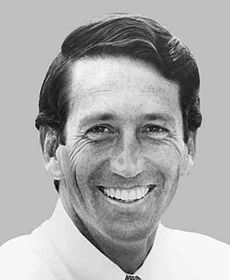
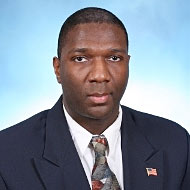
Above top, Mark Sanford (SC), John Edwards (NC); second row, Sarah Palin (Alaska), and Alvin Greene (SC Dem Party photo). (The Sanford, Edwards and Palin photos are from Wikipedia.) Sanford and Edwards are “Establishment.” Palin and Greene are “outsiders” (Ok, Mr. Greene is a new outsider, and Ms. Palin is a veteran outsider.) Sarah Palin represents the Tea Party, and Alvin Greene represents the Mockingbird Party (unless someone comes up with a better name).

Your vote counts! In fact, your vote is the most important vote! No poll tax! All races and  genders welcome to participate. Is this a great and free country, or what?

CAUTION: World Economic Crisis Phase II, Political and Social Upheaval

[picapp align=”center” wrap=”false” link=”term=greece&iid=8708516″ src=”c/8/c/e/General_Strike_Paralyses_12da.jpg?adImageId=12763080&imageId=8708516″ width=”380″ height=”253″ /]
[picapp align=”center” wrap=”false” link=”term=greece+riots&iid=8709135″ src=”b/1/4/6/General_Strike_Paralyses_3ccb.jpg?adImageId=12762992&imageId=8709135″ width=”380″ height=”242″ /]
[picapp align=”center” wrap=”false” link=”term=greece+riots&iid=8708965″ src=”c/3/c/1/General_Strike_Paralyses_44fd.jpg?adImageId=12763050&imageId=8708965″ width=”380″ height=”253″ /]

Inhabitants of Spaceship Earth are suffering through an ongoing economic crisis. I say “crisis,” only because my mind cannot grasp the enormity of total worldwide economic “collapse.” Whatever you call it, we are living in a period of  economic change and dislocation.

Now begins Phase II of the crisis, in which the pain from economic dislocation begets social and political unrest. Some obvious symptoms:

  • Failure of the United States political system to compromise on universal health care, or on immigration policy.
  • Rise of the Tea Party protest movement in the U.S.
  • States in the U.S., and nations in Europe, on the brink of insolvency.
  • Rioting in Greece against government austerity measures.
  • Demonstrations in Arizona against a state crackdown on Mexican immigrants.

Unpredictable acts of nature — such as Hurricane Katrina and the volcano in Iceland — or manmade disasters — such as an offshore oil spill in the Gulf of Mexico — send shock waves through the unstable economy.

[picapp align=”center” wrap=”false” link=”term=Arizona+protests&iid=8676035″ src=”6/2/5/c/Thousands_turn_out_138e.JPG?adImageId=12763327&imageId=8676035″ width=”380″ height=”322″ /]

On all sides, people remain in determined denial and resist acknowledging or sharing culpability for economic damage.  Wall Street arrogantly resists financial restrictions. Voters everywhere reject tax increases.

Social cohesion breaks down as elites withdraw, militias form, terrorism spreads. Groups and individuals protect self-interest, rather than support community interest. Social and political divisions harden, willingness to cooperate or compromise evaporates, battle lines are drawn. The governing emotions are anger, and fear.

[picapp align=”center” wrap=”false” link=”term=arizona+protest&iid=8675439″ src=”b/8/c/7/Thousands_turn_out_e2c7.JPG?adImageId=12763385&imageId=8675439″ width=”380″ height=”311″ /]

Economic fear could turn into panic on any given day. But perhaps the economic crisis will subside over time, and lead to needed reforms. Meanwhile, the ride will be bumpy. We may be seeing only the beginning of protests and riots. Social and political unrest might continue and intensify for a long time, possibly leading to localized violence, chaos, or anarchy.

No one can predict the future. Fasten your seatbelt and hope for the best.

— John Hayden

[picapp align=”center” wrap=”false” link=”term=arizona+protest&iid=8676272″ src=”5/d/6/7/Thousands_turn_out_cea1.JPG?adImageId=12763355&imageId=8676272″ width=”234″ height=”336″ /]

When Is It OK to Admit That You Might Not Be Young Anymore?

Am I getting old?  Or am I just getting lazy?

Sixty-something is one of those awkward stages in life. Like middle-school. Or kindergarten. Life is changing, and I’m not sure if I’m ready for change. Sometimes a kid feels like he can’t wait for kindergarten or middle school.  Other times, the same kid wants everything to stay the same. Maybe we could put off kindergarten or middle school until next year? Probably not. Ready or not, change comes on its own schedule.

I think this particular awkward stage starts at around age 51. Am I middle-aged, or am I beginning to feel old? Is it my imagination, or is it really harder to land a job when you’re past 50?

The awkward stage gets discombobulating between 61 and 65. Those commercials on TV for miracle prescription drugs — are those commercials talking to me?

After you hit the big six-oh, it’s not so easy to pretend that you’re middle-aged. Lots of folks over 60 claim they don’t feel any different than they did in their 30s and 40s. (Let’s do a three-mile fun run. Let’s start a new business. Let’s visit China.) Are these folks in denial? Or do they just have younger genes than me?

At 61, I definitely don’t feel middle-aged anymore, and it’s definitely not easy to get a new job, or buy health insurance. But I won’t qualify full Social Security until age 66, and I don’t qualify for Medicare. I’m in between. It’s an awkward stage.

I still have responsibilities, work to do, but my short-term memory isn’t so reliable. I keep a list so I won’t forget anything important.

After breakfast, first thing I feel like is taking a nap. Is that a sign that I’m getting old? Or am I just getting lazy? Was I always this lazy? Maybe it’s depression? Or Seasonal Affective Disorder? Do they have a pill that will make me feel ready to take on the world?

I have to stop blogging now. Looking at the computer screen makes my eyes feel dry and scratchy. Yes, those commercials for soothing eye drops are talking to me.

Here’s my plan: One soothing drop in each eye. Look at the list to make sure there’s nothing that can’t be put off. Take a nap.

I’ll think about getting old tomorrow.

President Obama Declares Support for ‘Public Option’ in a Health Insurance Exchange

Surfing back and forth between the cable news channels, FOX News and MSNBC, before President Barack Obama’s address to Congress on health care reform, a visitor from Mars would likely conclude that the Fox pundits and the MSNBC pundits reside in parallel universes, or perhaps on different planets. 

No surprise if it sometimes seems that people are brain-washed by either the conservative pundits at FOX or the liberals at MSNBC.

The president attempted Wednesday evening to speak over the heads of FOX and MSNBC, to speak directly to the American people. 

President Obama made his intentions and his resolve clear from the start of his address: “I am not the first president to take up this cause, but I am determined to be the last.” 

The president refused to parrot the pundits on either political extreme. He attempted to position himself squarely in the center, saying he prefers “to build on what works and fix what doesn’t, rather than try to build an entirely new system from scratch.”

Congress has been pecking at health care for months, in the unlikely hope of achieving a bipartisan agreement. Wednesday, the president finally made clear his own proposal.

President Obama proposed a “new insurance exchange” from which citizens could select  and pay for the health insurance plan of their choice. He proposed that the insurance exchange “take effect in four years, which will give us time to get it right.”

Ending weeks of speculation, the president came down solidly for a “not-for-profit public option” to be available along with private health insurance choices in the insurance exchange.

To those who fear losing their present health insurance, the president said: “Nothing in our plan requires you to change what you have,” and he declared, “I will protect Medicare.”

And to those who urged him to fight for health care reform, President Obama said, “I will not back down on the basic principle that if Americans cannot find affordable coverage, we will provide you with a choice.”

He declared that the principles of social justice and the character of America are at stake in the health care decision.

Let’s not let cable news channels trivialize the issues.

— John Hayden

Simplify Or Perish


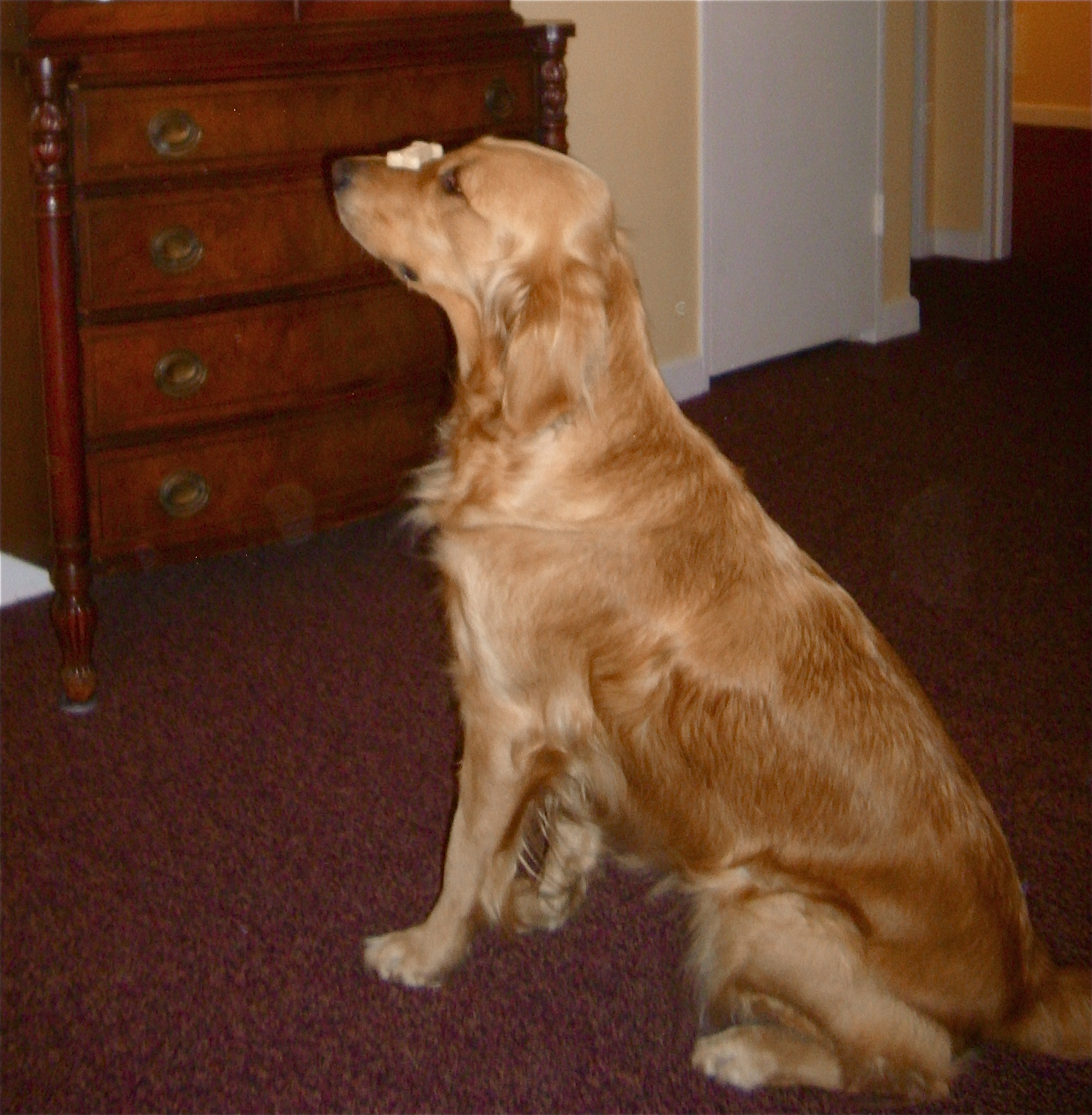
Golden Retriever with dog biscuit on nose

LILY WITH A DOG BISQUIT ON HER NOSE. NOT A PROBLEM. LILY KNOWS HOW TO SIMPLIFY THIS SITUATION.

My first encounter with simplicity came in a chess game, when I was a boy.

Sometimes I found myself on the defensive. My opponent had the momentum, I was constantly reacting to his moves. I needed a “game-changer.” When I could see no better option, I resorted to simplification.

In chess, I learned two quick ways to simplify. A player can “castle,” which is the only gambit in chess that allows you to move two pieces at once. Your king switches places with one of your rooks. This allows your king to escape immediate pressure, and possibly creates a whole new dynamic on the chess board.

The other way to simplify in chess is a last resort. You “exchange” pieces of equal value. For instance, you take your opponent’s knight, knowing that one of your own knights will be captured. You sacrifice your knight for your opponent’s, and both knights are removed from the board. The result is a “simplified” game, perhaps working to your advantage.

If the exchange involves the most powerful chess pieces, sacrificing a queen for a queen, the result can be dramatic simplification. Without the queens, the players may be reduced to a frustrating game of attrition, possibly leading to stalemate rather than checkmate.

lilly

In real life, as in chess, you often have to give up something in return for simplification.

I can choose a new major in college; fire my boss (i.e., quit my job); end a friendship or relationship. I can give up a hobby or recreation that takes time away from responsibilities; change a harmful habit or behavior, improve my diet, quit smoking.

As in chess, I may have to give up something, sacrifice something.  Changes usually require thought and decision-making, even discernment. Not every change leads to simplicity. Sometimes we need to make a change to challenge ourselves more, not less; to grow; to be more productive. Small changes may have greater consequences than we imagined.

Some changes can be turning points.  A career change, a marriage or divorce, a geographic relocation — all these have the power to change the course of your life.

A desire for ease or simplicity is not sufficient reason to walk away from a responsibility. Many times, life requires us to take up new responsibilities. Necessary change may make life more complicated, not more simple.

But even shouldering heavy responsibilities can sometimes simplify life. The responsibility may be greater, but the way forward may be clearer. By giving up what is unnecessary or distracting, we may be able to focus on what is important.

As the author Marsha Sinetar says, attention is power. Giving full attention to what is important is a kind of simplicity.

Simplicity is not for every person or every situation. When I study, I like to study in silence. But many people prefer to study while listening to music. People are very different in their abilities, talents, and needs. My doctor once pointed out that intelligence is like computing power. Some computers have more processing power than others. Some people can tolerate more complexity than others. Some people thrive on complexity.

I’ve often found myself working with people who have faster brains than mine. I’ve often compensated by working longer hours to keep up. This can lead to fatigue or even burnout. So I often seek simplicity, either through focused concentration, or simple lifestyle. Not many responsibilities, only one or two. Not many interests and recreations, one or two is enough.

I’ve always been attracted to simplicity. As a boy, I though Dunkin’ Donuts had an excellent business concept, and later, McDonald’s. They concentrated on a limited menu. Donuts and coffee; or hamburgers, French fries, and milkshakes. They focused on consistent quality and service.

Simplicity is not for everyone. I don’t agree with self-help gurus who say, “Everyone should do this,” or “Everyone must do that.”  You hear that everyone should meditate; the world would be better if we were all vegetarians; everyone should exercise four times a week; everyone should give up sugar and salt; everyone should use mass transportation, or ride a bicycle to work. All good suggestions, but not for everybody. People are different, and one size does not fit all.

Many people thrive on complexity.  I need to simplify in order to survive.

— John Hayden

Escape To A New Reality

I am a refugee from reality, if you call grinding work, urban congestion, and expensive lifestyle “reality.”

I began seriously losing speed and altitude in 2002, when I accepted a small buyout from a large company, at the age of 53. It was my last stop on a career of more than 25 years. My boss said I “had guts” because I was making a change in my 50s. I said, “Change is good.”

In the intervening years, I’ve made do with a variety of survival jobs in metro areas. Twice I stayed with the same job nearly two years. By the time I hit 60 (last summer),  I felt like my job was killing me. The metro suburbs seemed more and more congested, stressful and expensive. There was no sense of community. It didn’t feel like a civilized way to live.

I thought all summer about escaping. In early September, I found an inexpensive and very small apartment in a beautiful area, at some distance from the big city. I gave two weeks notice. I spent October sorting and boxing possessions. What I didn’t need I gave away or tossed in the dumpster. Most of the large furniture went to good homes with relatives. A few boxes and chairs are stored in a relative’s basement.

What was left, was transported, with help from my brothers, in one pickup truck and three carloads, to the new apartment. I felt like a fugitive — a happy fugitive. I escaped in broad daylight.

It took most of November to get unpacked and settled in my new retreat. After 44 continuous years of paid work, from age 16 to age 60, I granted myself a winter off. Six months of leisure and freedom to partially restore body and soul. To be continued . . .

Losing Speed And Altitude

I have a picture in my mind of America as a high-flying jumbo jet with two powerful engines. One engine is American democracy, and the other is American capitalism.

Democracy and capitalism have served America well, but both engines are showing their age and in danger of burning out.

I could use the same metaphor for my own life’s trajectory, and I will. Flying at typical American cruising speed, I enjoyed moderate career success and a modest level of affluence. I lived the middle-class American lifestyle, credit cards and all. In my early 50s, I began to lose speed and altitude at an alarming rate. By the time I hit 60, I felt about burned out!

A lot of Americans in my age cohort (the baby-boomer generation) are in the same boat . . . make that the same airplane.

This “How To Make A Controlled Crash Landing” blog will attempt a serious but light-hearted commentary on the above phenomena — the faltering American political and economic systems, and the predicament of everyday Americans, particularly those of us who have reached a certain age.

It appears that mid-flight corrections are needed to save American democracy and capitalism. And many Americans are coping with unavoidable adjustments in the way we live. It’s called CHANGE. We’ll be talking about it a lot.

Personally, I’m trying to change my life in the direction of simplicity and frugality.

Posts to this blog will be frequent, short, and sweet. Period. Amen.