Political Zeitgeist In America

Is there any political reality remaining in America? I’ve been trying to make sense of the political zeitgeist following the election of 2010. Two contradictory perspectives came into focus this week.

Vice President Joe Biden summed up the message from the electorate on “Meet the Press.” Voters want elected officials of both parties to work together and compromise, Mr. Biden said.

MICHELLE RHEE. -- Wikimedia Commons public domain photo

Michelle Rhee, an education reformer who used to be chancellor of D.C. public schools, stated a different position in “Newsweek.”

“I don’t think consensus can  be the goal.” said Ms. Rhee. And: “We can’t shy away from conflict.”

That’s the tension in American democracy — longing for peace and compromise on one hand; and an appetite for political conflict on the other. Voters who are comfortable with the status quo yearn for politics without conflict. They see reformers as troublemakers.

Reformers seeking change are impatient with compromise. They’re willing to tolerate a degree of political unpleasantness to achieve a goal. Compromise usually doesn’t bring them closer to the goal. Compromise simply kicks the problem down the road for a year or three.


THE AMERICAN ELECTORATE IS NOT ONLY POLARIZED AT THE EXTREMES. THE INDEPENDENTS IN THE MIDDLE HAVE LITTLE USE FOR EITHER SIDE. Wikimedia Commons public domain image.

It’s human nature to seek the easiest path, to avoid pain and sacrifice. So it’s not surprising that a majority wants compromise. That’s what happened this week, when President Obama crafted an agreement with Senate Republicans to extend current tax cuts for the wealthy, and at the same time extend unemployment compensation for the poor.

The tax-cut compromise is the easy path. It avoids pain all around. But it also adds billions to the national debt. The majority of voters got what they wanted, a minimum of conflict. They are pleased to kick difficult decisions about the national debt and economic austerity down the road.

Americans seem to be dangerously addicted to the easy path. European nations are engaged in national debates (often in the streets) over austerity measures to address their debt problems. America is falling behind on debt, just as we are falling behind in economic competitiveness.

Most troubling of all is that America has fallen way behind other advanced countries in education. Michelle Rhee knows about the public schools:

“The truth is that despite a handful of successful reforms, the state of American education is pitiful, and getting worse.”

If we’re not competitive on education, we won’t have a chance to be competitive economically. And the American electorate complacently ignores the education crisis. In fact, state and local governments are preparing to cut deeply into funding for education, in order to balance government budgets.

Ms. Rhee is quite forthright about the political path to improving education in America. And it’s definitely not the easy path.

“Public school reform is the civil-rights issue of our generation. Well, during the civil-rights movement, they didn’t work everything out by sitting down collaboratively and compromising. Conflict was necessary in order to move the agenda forward. There are some fundamental disagreements that exist right now about what kind of progress is possible and what strategies will be most effective. Right now, what we need to do is fight.”

Any questions? Yes, political conflict is necessary for problem-solving and progress. In some other countries, they resolve political differences through violent conflict. In America, we resolve political differences through elections. Settling our conflicts through civil debate, rather than violence, is the great achievement of democracy in America.

We need to start addressing our political conflicts, not avoiding them. The sooner the better.

— John Hayden

Secrets of Living Large In A Small Apartment

A TALL, SNOW-COVERED, OUTDOOR CHRISTMAS TREE IS THE RIGHT SOLUTION WHEN YOU LIVE IN A SMALL, INDOOR APARTMENT.

I’m making some progress on downsizing and simplifying my lifestyle. Two years ago, I moved from a large apartment in a pricey suburban neighborhood to a small apartment in a rural/seasonal resort area three hours from the cities.

I gave away a lot of stuff, and moved what was left helter-skelter into a one-room apartment. It has two windows in front and a door and screened porch in back. Cross-ventilation!

Rent is reasonable and includes all utilities. Priceless amenities are a quiet street that ends at the marsh; a parking space; a small fenced yard, with nothing but woods beyond; cable TV and high-speed internet service.

One-Room Apartment “Before” Pictures

CLUTTER GONE WILD.

CLUTTER ALL AROUND.

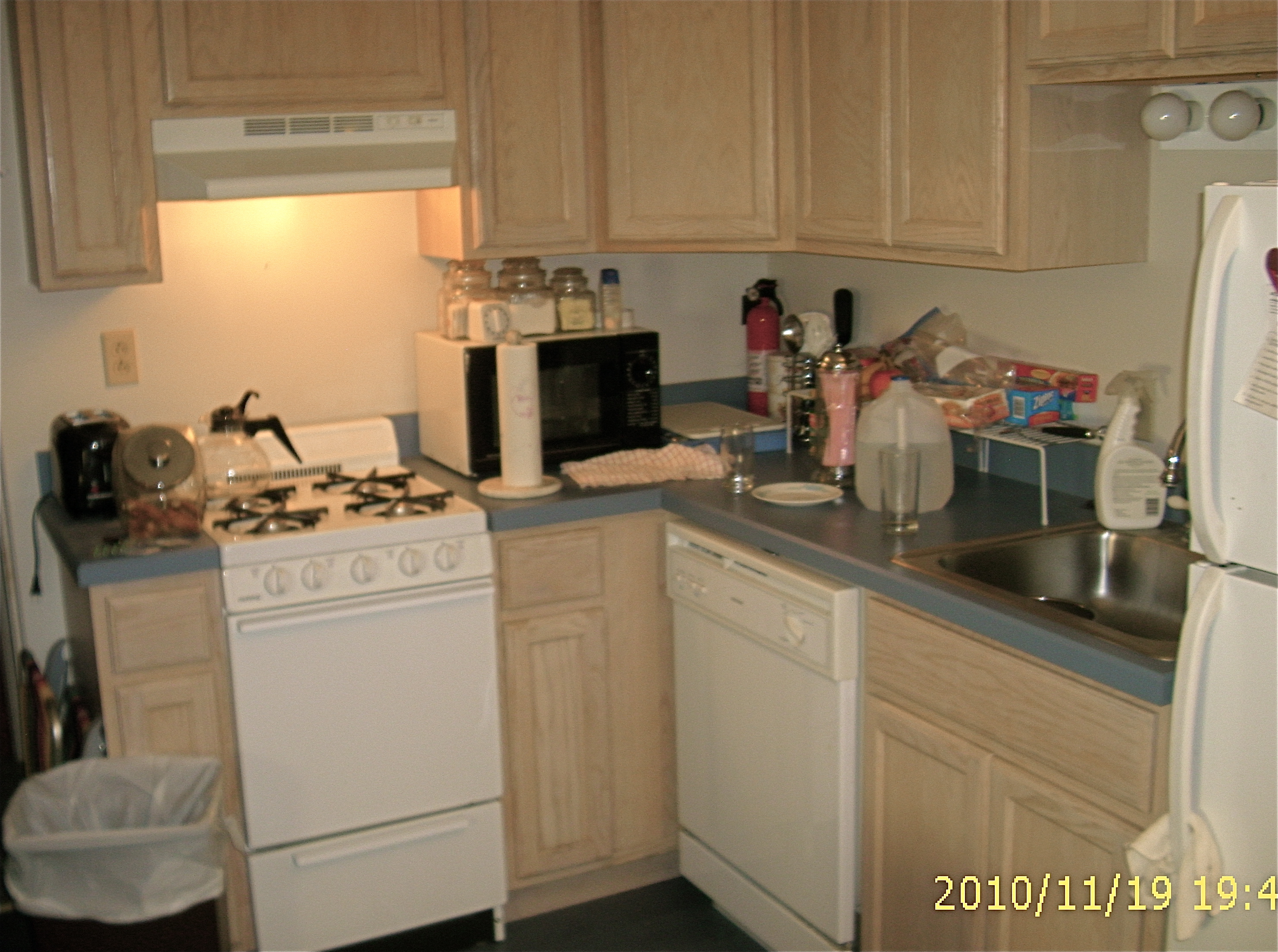
A COMPLETE GALLEY KITCHEN. EVEN A FIRE EXTINGUISHER, IN CASE I TRY TO COOK.

My neighborhood is an enclave of quiet affluence. Within sight, across the water, is a resort that can be rowdy in summer and a ghost town in winter. I might be the poorest church mouse on the block, but not the only one living on a tight budget. A few of the houses are little more than old beach cottages, but most are medium-size, modern homes with that suburban look. Some of the more spacious houses have million-dollar waterfront views. Within a short walk are two grand, waterfront homes that must be worth . . . I can’t even guess. One of them is a modern mansion.

No Extra Charge For Natural Beauty

THE MARSH IN WINTER. VISIBLE BY WALKING DOWN THE STREET. NATURAL BEAUTY AND PUBLIC SPACES ARE IMPORTANT AND USUALLY FREE.

But I digress. This post is not about living large in a mansion. Anyone could do that. And it’s not about living large in your car or a tent, which would be more of a challenge than I’m up to. We’re talking about a modest and attainable goal of living large in a small apartment. (If your apartment has a separate living room and bedroom, with a walk-in closet . . . well, that doesn’t qualify as small).

If It’s Big Enough For A Cat . . .

SAFE AT HOME. LOLA IS PERFECTLY CONTENT IN A SMALL APARTMENT.

My challenges with living large in a one-room apartment are the same ones I would have in a big house. Fundamentally, I have no “nesting instinct.” Plus, I’m disorganized. The only kind of order that comes naturally to me is “Robert’s Rules of Order.” For everyday life, the nesting instinct is more useful than Robert’s Rules.

My Rules Of Order

Here are Hayden’s Rules of Order for one-room apartment living:

  • Pay the rent on time. Otherwise, you will be living in your car.
  • I’ve got to get organized, and it can’t be forever put off until tomorrow. Two years is long enough.
  • A place for everything. Everything in its place. Efficient use of what little storage space you have is essential if you live in one room and you own more than one “thing.” One-room apartments generally don’t have wine cellars, garages, or attics. Not even walk-in closets. Drawers, shelves and hooks are essential. (The easiest kind of hook is a nail in the wall, but some landlords frown on this method.)
  • Furniture. Less is better. Replace all large pieces of furniture with small. I’ve replaced the sofa with a chair, and the double bed with a single bed. (It helps if you have the lifestyle of a monk). A toaster is better than a toaster-oven; a good radio/CD player is better than a complicated stereo system; a laptop is better than a desktop.)
  • You can break the small-furniture rule once. I still have the same medium-sized dining room table as when I lived in more spacious apartments. The table is clunky and dominates my one-room apartment. But it’s an all-purpose table. It serves as dining room table, kitchen table, and desk. I need a certain amount of surface area to be organized, whether the task is paying the bills or making soup.
  • Experiment. Find a way to make the furniture fit. I’m on the third rearrangement of my furniture. After two years, you get tired of playing “furniture checkers.”  Furniture checkers is a game in which you have to move one chair and jump over at least one other “thing” in order to get to your goal. There must be a way to arrange this furniture efficiently! I will have to find it by trial and error, since I have no interior design skills.

HOME OFFICE OF THE ConsterNation BLOGGING EMPIRE. SOMETIMES ALSO USED AS A POLITICAL CAMPAIGN HEADQUARTERS.

Clutter Is My Enemy

I’ve saved the most important secret of living large for last. As you can plainly see from the photos, I need to reduce clutter.

People sometimes criticize me for having too much “stuff.” I’ve gotten rid of enormous amounts of stuff, but I still have too much. Other people have their stuff all over the basement, the garage, the attic, the walk-in closet, the guest room. And that’s not all. Homeowners often rent a storage space for their extra stuff. Why don’t they simply give it away or sell it on eBay?

Everything I own is inside my one-room apartment, or inside my car, which is parked in the driveway. And there’s a limit to how much clutter I can hide in the trunk of the car.

To sum up, I need to get organized and reduce clutter. That’s not too much to ask. I call this challenge “My Apartment Project.” Two years is long enough to put it off. What you see here are the “before” pictures. Coming soon will be the “after” pictures. Wish me luck and stay tuned.

If you have any helpful tips on one-room apartment living, they would be welcome under “comments” below.

— John Hayden

Unemployment and $3 Gasoline in the U.S., Austerity and Street Protests in the Capitals of Europe

BOOK SHIELDS IN ROME. One of many photos circulating in European newspapers and blogs, of protests against government austerity plans. This one shows students in Rome using book-like shields. Tomorrow, you'll likely see similar street theater in London. But only if you have access to European sources.

The beautiful people on CNBC, the Wall Street propaganda channel, chat happily about how high stocks might fly, and the price of gold and oil.  It’s surreal.

Even as they talk, the economy of the Western world is teetering on the edge of chaos. Students protest daily in the capitals of Europe against draconian austerity plans designed to screw the middle class and working class, and especially the younger generations. European governments seem intent on staving off default by cutting deeply into funding for education, arts and humanities. As you can see, ConsterNation is an international state of mind.

You need direct European sources to keep up with events over there. For instance, news and photos of the book protests in Rome can be found at this Italian blog by Italian novelists. If you can read Italian, you could look at their main blog.

Baroque in Hackney reports that students in London will mount a similar protest on Thursday. Ms. B even provides the address where you can go on Tuesday to help make life-sized books for the demonstration, if you happen to be in London. If not, there’s plenty of time to get there by Thursday. It’s a small world, so they tell me.

“With Arts and Humanities a particular target for UK cuts this is a literal display of literary resistance.”  — Ms. B

For more inside information (and videos) from the U.K., you could look at Coalition of Resistance.

Until recently, the U.S. cable channels had been reporting on the debt crises in Greece and Ireland. But as the contagion threatens to spread throughout the southern half of Europe, coverage in the U.S. has all but disappeared. You’ll not likely see film or photos of protests in Europe on CNBC, or any other news channel.

Could the U.S. news blackout on European protests be a conspiracy to keep Americans from knowing the extent of economic turmoil, at least until after the Christmas shopping season? When did I become so cynical? Maybe the news blackout is to prevent protest fever from jumping the Atlantic and infecting U.S. students. Maybe it’s to prevent panic.

Let’s go to the NUMBERS.

Even as the beautiful TV people talk, unemployment in the U.S. is 9.8 percent, officially, and possibly twice that much, in reality. Members of the U.S. Armed Forces are fighting and dying in Afghanistan and Iraq, and for their service they will receive a 1.4 percent pay increase, the lowest in many years. The price of gasoline is $2.97 a gallon, where I live, and more than $3, in urban areas. The snow is knee-deep, or higher, in Buffalo, N.Y.; and the temperature is going down to 30 degrees tonight in Orlando, Florida.

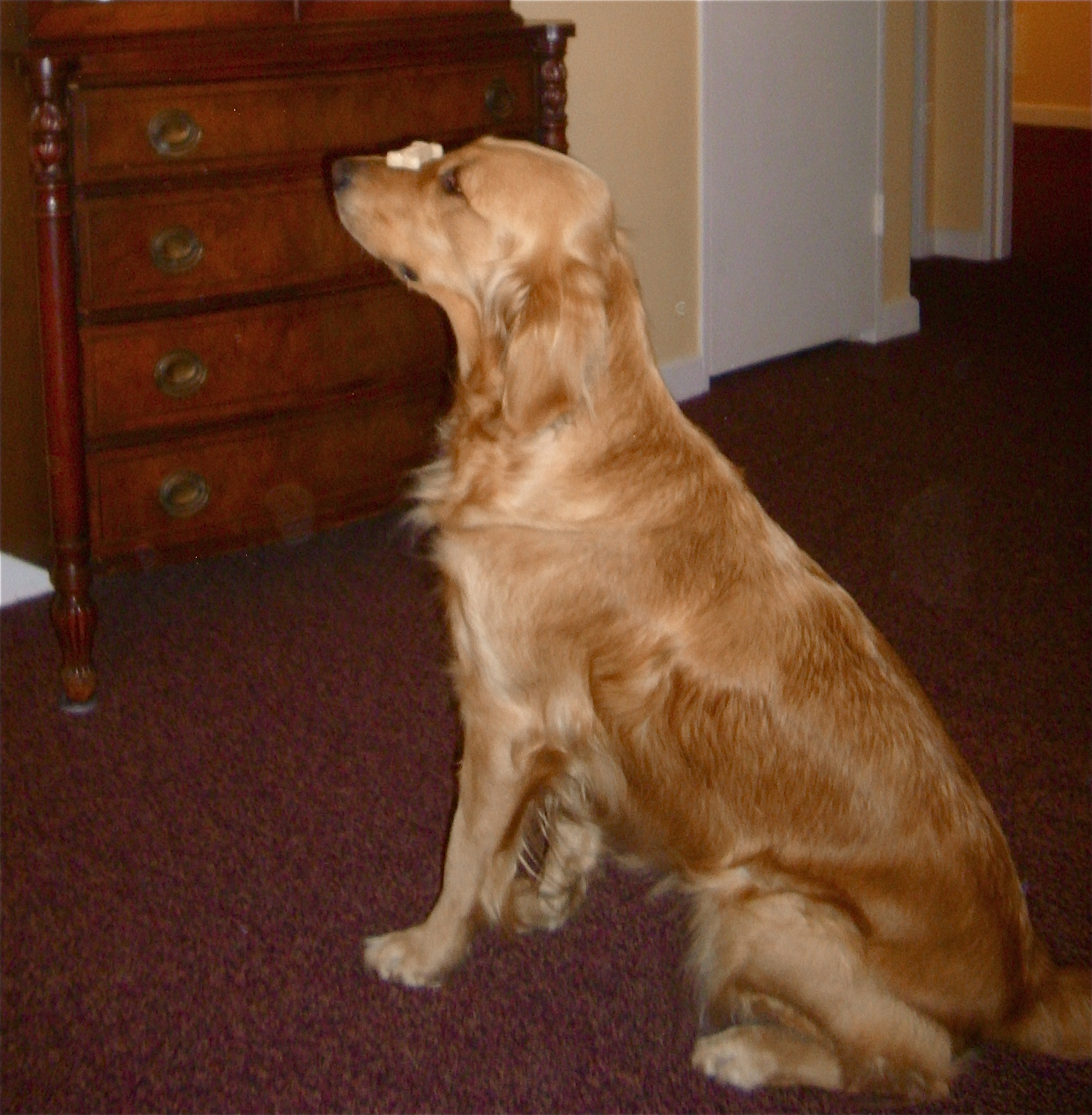
LILY HAS AWESOME POWERS OF CONCENTRATION WHEN A DOG BISCUIT IS BALANCED ON HER NOSE.

And Lily, the golden retriever, has about a one-in-three chance of balancing a dog biscuit on her nose, tossing it in the air, and catching it in her mouth. I had to add the true story about Lily and the dog biscuit for a little comic relief.

No one can predict the future. But let me make a few guesses. The temperature will go up later this week in Florida, and the snow will melt in Buffalo, by late spring.

But across America, it is entirely possible that unemployment will remain above 10 per cent and gasoline will remain above $3. For how long? Forever.

And what will the austerity plan agreed to by the U.S. government and the Wall Street tycoons look like? I will not hazard even a guess.

— John Hayden