Opportunities for Political Mischief

I personally believe that U.S. debt is not a “crisis,” particularly with the economy now expanding. It would be crazy to derail the expansion, which will do much to mitigate debt, by sharply cutting government spending.

But as you can see from the graphic at Fix The Debt., the debt is an issue that’s not going away. Plenty of opportunities (speed bumps) for mischief between now and 2014 elections.

Just my opinion.  — John Hayden

Maryland’s Political Divide Part 1, Gas Tax

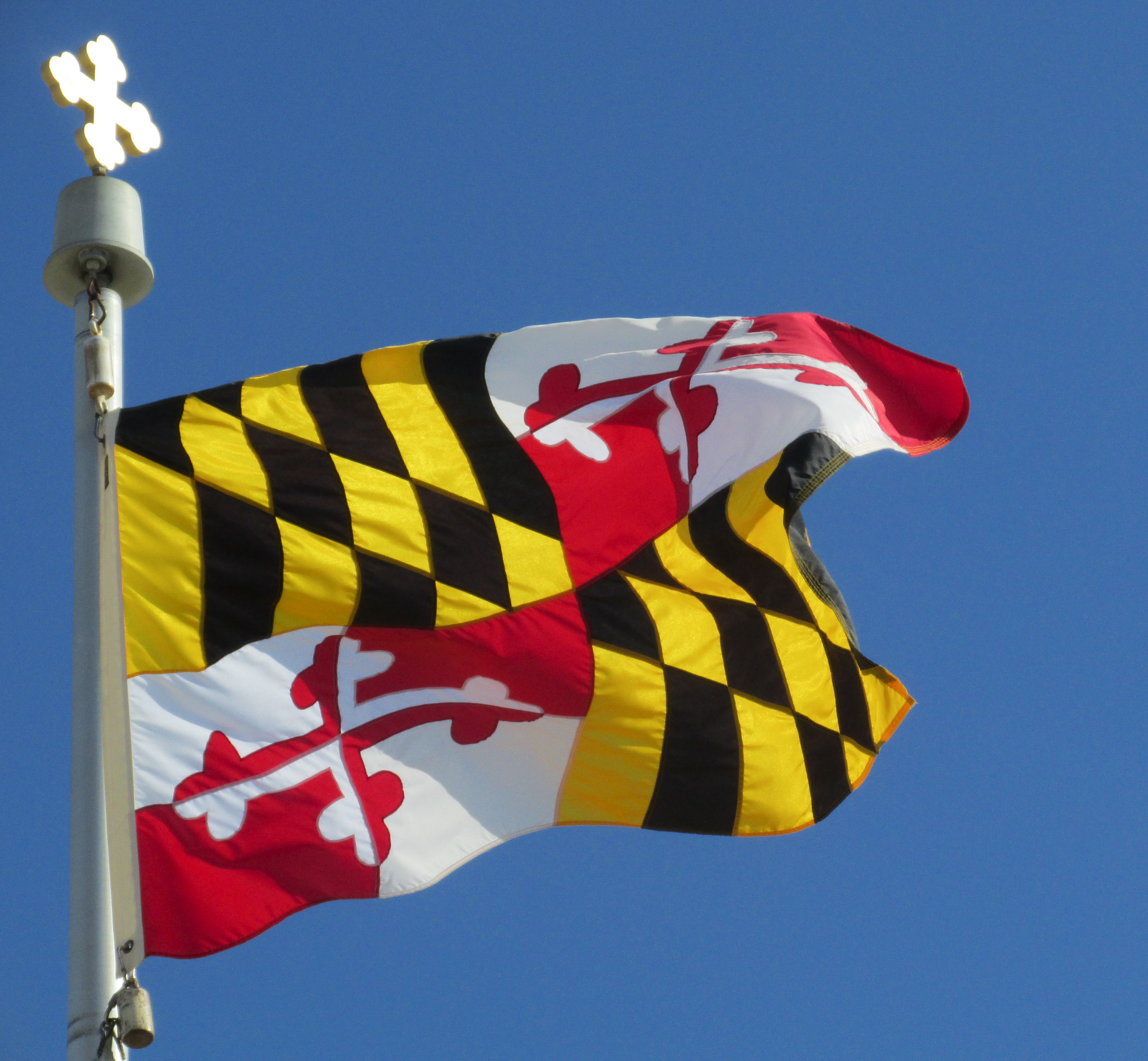
MD flag 2

PART ONE OF A SERIES

The vote on the gasoline tax in the Maryland House of Delegates gives us an interesting snapshot of the political balance in Maryland, a state considered to be among the bluest of the blue. The picture might not exactly match the popular perception.  Continue reading

Small States Dominate U.S. Senate

“The power of the smaller states is large and growing. Political scientists call it a striking exception to the democratic principle of ‘one person, one vote.’ Indeed, they say, the Senate may be the least democratic legislative chamber in any developed nation.”

New York Times reporter Adam Liptak reports on the well-known but confounding political power of small states in the U.S. Senate and the Electoral College under the headline, Smaller States Find Outsize Clout Growing in Senate.”

English: Electoral college map for the 2012, 2...

Electoral college map for the 2012, 2016 and 2020 United States presidential elections, based on apportionment data from the US Census Bureau. (Photo credit: Wikipedia)

Under the U.S. Constitution, Wyoming, the state with the smallest population in America, has two U.S. senators. So does California, the state with the largest population. The stunning result in the U.S. Senate is shown in this striking NY Times graphic.

One obvious result is that small states receive much more Federal money, per capita, than large states. A look at the map also shows that most of the smaller states are conservative, Republican-voting, Red states. The small states have many more votes in the Senate than the large states.

Small states also have an advantage in the Electoral College, though not as great as their advantage in the Senate. For this reason, the Electoral College has chosen a president who did not receive a majority of the popular vote. It will undoubtedly happen again, and it could call into question the very legitimacy of a U.S. president.

“In 2000, had electoral votes been allocated by population, without the two-vote bonuses, Al Gore would have prevailed over George W. Bush. Alexander Keyssar, a historian of democracy at Harvard, said he would not be surprised if another Republican candidate won the presidency while losing the popular vote in coming decades, given the structure of the Electoral College.”

Is it any wonder that democracy in America appears to be broken?

— John Hayden

The Truth About Sequestration And Democracy, According to One Humble American

“Sequestration” went into effect in America this week, reducing U.S. government spending by $85 billion.

What does it mean? It means that the United States has accepted “Austerity.” 

It’s not the end of the world. The vast majority of U.S. government spending will continue as usual. The government will not grind to a halt, at least not because of sequestration. It’s still possible that Congress could force a shut-down of government sometime in the future, but not likely this year.

Failure of Government Decision-making

Most interestingly, Austerity was NOT imposed by the normal processes of legislative or executive action.  Continue reading

Can A Ship Sail Right Over The Edge Of The Earth?

“The U.S no longer has a well-functioning self-government. . . .  American democracy has been hacked. The United States Congress, the avatar of the democratically elected national legislatures in the modern world, is now incapable of passing laws without permission from the corporate lobbies and other special interests that control their campaign finances.” 

The above quote is from Al Gore’s new book, “The Future.” It makes sobering reading as the U.S. ship of state drifts, apparently rudderless, toward “sequestration.” Is the bridge abandoned? Have the helm and the engine room broken down?

I don’t understand the panic over sequestration, but I am concerned about the ability of U.S. government institutions to function. Continue reading

Virtual Democracy Emerging As We Tweet

Think Congress is dysfunctional? That’s old news.

Consider replacing traditional representative government with a revolutionary new system.

Listen: Radio talk shows had a bright idea.

Two words: “Audience participation.”  Invite listeners to call in.  You can be on live radio! —  But only a select few get through the jammed switchboard.

Next, invite listeners to send an email.  — Bingo! Everybody gets through! — The host reads four or five emails in the time it takes to chat with one caller.

English: Tweeting bird, derived from the initi...

(Photo credit: Wikipedia)

Fast forward to cable TV news:

“We want to know what you think. Send us a Tweet about  [insert burning issue of the day]. We might read your Tweet on the air.”

Next step, Reality: 

Vote “Yes” or “No” by dialing a number on your cell phone.  Continue reading

What If Debt Is Not The Problem?

Wipe our Debt

(Photo credit: Images_of_Money)

“As we return once again to our regularly scheduled program of ‘Crisis And Impasse,’ let’s take a moment to consider the following heretical idea: We have no debt problem.”

That’s the take-your-breath-away lead to a commentary by Zachary Karabell on the business section front of today’s Washington Post. Karabell gives a concise overview of the American debt debate from the time of Alexander Hamilton and Thomas Jefferson through William Jennings Bryan and the long-running confrontation over the gold standard, up to the present day. Continue reading

Democracy At A Crossroads

Photo by John Hayden

Photo by John Hayden

“If democracy deadlocks here, we raise doubts about democracy everywhere.”

Sen. John Kerry made that sobering comment during his farewell address to the U.S. Senate this week. He’s leaving the Senate to become the new U.S. secretary of state, America’s ambassador to the world.

I don’t know about the whole wide world, but I think we have good reason to be concerned about the state of democracy here in America.   Continue reading

Faith In The Future

On the second inaugural of President Barack Obama
God bless America
God bless the president
Keep the faith!

America Divided, With Reader Comments

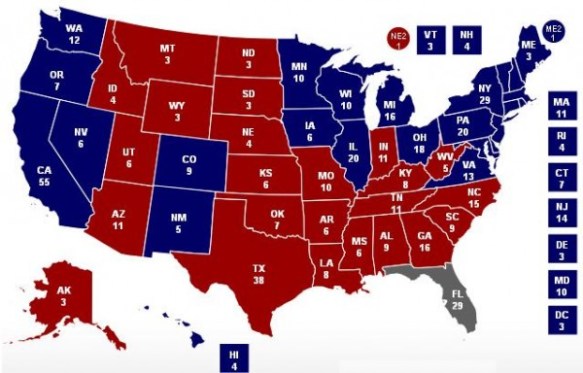
U.S. 2012 ELECTION RESULTS, BLUE STATES  FOR OBAMA, RED STATES FOR ROMNEY. FLORIDA, THE LAST STATE TO BE DECIDED, WENT BLUE. (Map via Wikipedia)

U.S. 2012 ELECTION RESULTS, BLUE STATES FOR OBAMA, RED STATES FOR ROMNEY. FLORIDA, THE LAST STATE TO BE DECIDED, WENT BLUE. (Map via Wikipedia)

“This is the America that Obama will govern in his second term: A place divided not only by ideology, race and class but also by the very perception of reality. . . . The president who spoke ambitiously at his first inauguration about uniting America instead arrives at his second with the country further divided.”Eli Saslow, The Washington Post, Jan. 20, 2013

Note:  This post was published in 2013 following the 2012 presidential election. It seems more relevant than ever as America prepares for the 2016 presidential election.

Divided by ideology, race and class.

English: Abraham Lincoln, the sixteenth Presid...

(Photo credit: Wikipedia)

That sums up America in the decade leading up to the Civil War, as described in Team Of Rivals,” Doris Kearns Goodwin’s history of Abraham Lincoln and the politicians, abolitionists, generals, and ordinary people of his era. The similarities between the present time and the decade before the Civil War are striking and frightening. Continue reading