Real Estate Development Always At Issue in Montgomery County Elections

UPDATE: For more on economic development and growth in Montgomery County, past and future, please see my post, “Contemplating Life Inside An Economic Engine,” at the TheSeventhState political blog,  http://www.theseventhstate.com

_______________________

Most Americans outside the beltway* are justified in thinking that the Washington, D.C., metropolitan area is a one-company town, and that company is the U.S. government with its myriad contractors.

But here in Montgomery County, MD, the industry with political clout, decade after decade, is real estate development. It’s always a lucrative proposition. Start with some relatively inexpensive farmland, rough-in a few roads and water and sewer, build housing, and sell the added value for a tidy profit. Styles change — ticky-tacky ranchers, split-levels, townhouses, McMansions, luxury apartments or condos — but the concept remains the same.

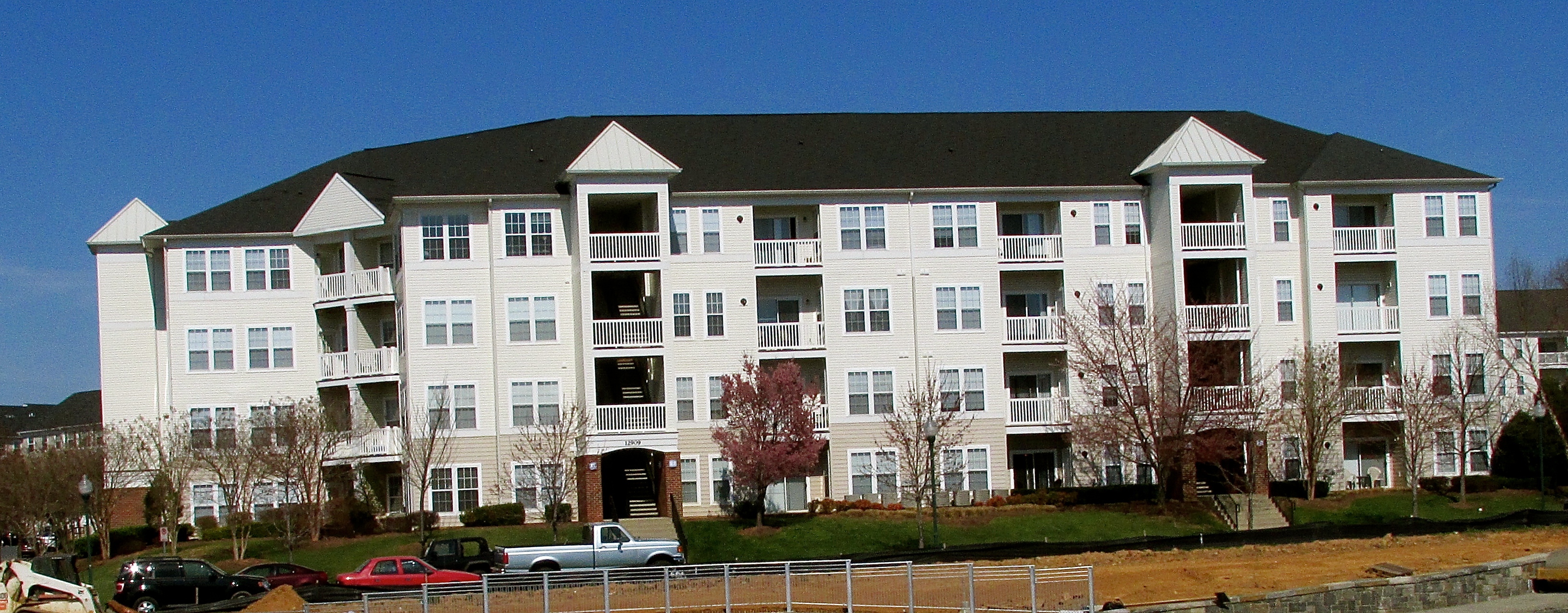
An example of the modern residential construction style, the four-story rectangle with pitched roof. It allows somewhat denser development than the three-story garden apartments of the 20th  century.

An example of the modern residential construction style, the four-story rectangle with pitched roof. It allows somewhat denser development than the three-story garden apartments of the 20th century. This one is in Germantown.

Development has been a political issue in every local election for as long as I can remember. The slogans are short and sweet: No Growth, Slow Growth, Managed Growth, Smart Growth.

Sometimes the focus appears to be on related construction, such as adequate schools, highways, pubic transit, even parks and open space.**  The undercurrent is always development. Some recent twists have been fill-in development and redevelopment.

Election 2014 will be more of the same. If anything, the focus on development has been reinvigorated by the recent debate regarding Ten Mile Creek and Clarksburg. Bill Turque of The Washington Post has a concise story today highlighting the influence of developers on Montgomery County local politics. It’s a little bit “inside baseball,” but it might be a good introduction for voters new to the area.

The proximate subject is the Democratic primary contest for the District 1 County Council seat between Roger Berliner and Dutchy Trachtenberg.  The tantalizing story is a political fund-raiser associated with the development community calling the Sierra Club “the most vicious anti-development, anti-growth organization in the country.” For the record, the Sierra Club endorsed Berliner over Trachtenberg.

The “most vicious anti-development” trash talk is only a passing tempest in a long campaign season. But for any new MoCo voter, the story pulls back the curtain on the role of political contributions by real estate development interests. Montgomery county is home to a million people. Candidates for County Executive and the nine County Council seats face about a million pounds of pressure from all sorts of interests, with developers supplying much of the tonnage. Developer interests, as might be expected, are usually at odds with environmental concerns.

A secondary insight from the story is the role of candidate endorsements by influential interest groups such as the Sierra Club. Every imaginable interest group throughout the state is pestering candidates with questionnaires, with endorsements often forthcoming for the right answers. However, endorsements are sometimes often made in arbitrary fashion behind closed doors. In many cases, endorsements go almost automatically to incumbents, rather than challengers.

— John Hayden

* Maybe it’s time to retire “inside the beltway” and replace it with “inside the InterCounty Connector.”

** In the early days of suburbia, country club golf courses were often cited as “open space.”

Any thoughts on the wild world of nearly unlimited campaign money?

Montgomery County Council Candidates List (With Websites And Map)

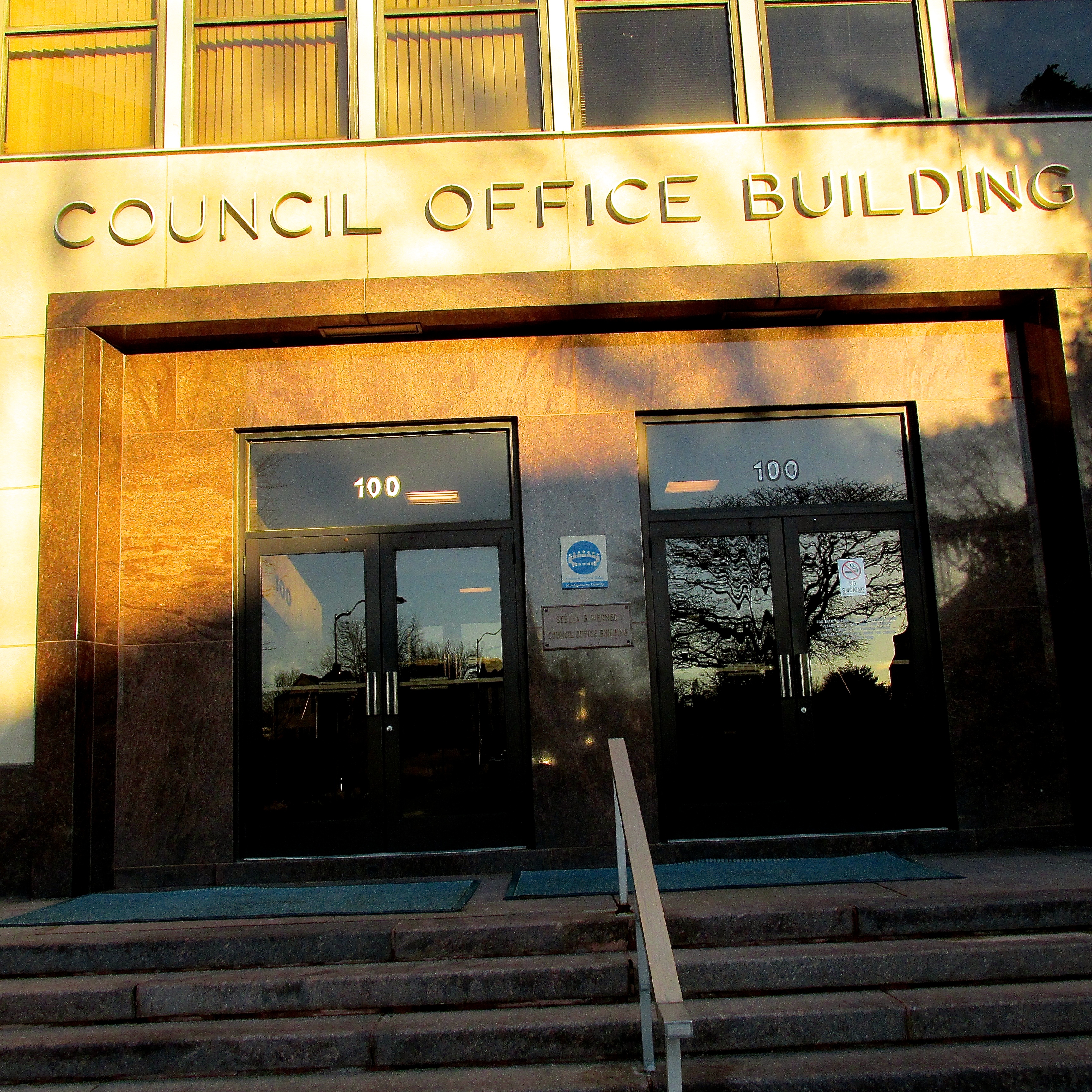
Council office bldgCounty Council Candidates, 2014

Candidates are listed in alphabetical order by last name and party. They’re color-coded, blue for Democrats, red for Republicans, and green for Green Party.

All nine County Council seats are up for election for four-year terms in 2014. In Montgomery County we have 20 Democratic candidates, four Republicans, and one Green Party candidate.

The 2014 Primary Election is June 24. Democrats will have a choice of Democratic candidates for County Council in the at-large race and in four of the five districts. Not enough Republican candidates filed to give Republicans  a contested primary in the at-large race or any of the district races.

At-Large Candidates, Democrats (Vote for four)

At-Large Candidates, Republican (Vote for four)

  • ROBERT DYER — www.robertdyer.net — Republican 
  • SHELLY SKOLNICK — no website listed — Republican

At-large Candidates, Green (Vote for four)

Montgomery County Council districts map.

Montgomery County Council districts map.

Council District 1 (Vote for one)

Council District 2 (Vote for one)

Council District 3 (Vote for one)

Council District 4 (Vote for one)

Council District 5 (Vote for one)

Notes:

Information source: Maryland State Board of Elections. Some candidate websites may not be operational. Some candidates may have websites that are not listed with the Board of Elections.

Registered voters in Montgomery County can vote for four at-large council candidates, and one candidate to represent the district you live in.

Please report any omissions, misspellings or other errors to BJohnHayden@icloud.com.

(A few Republican candidates were nominated AFTER the candidate filing deadline by the Republican Central Committee, to avoid the embarrassment of having no Republican candidate at all for some seats. I’ll update the list eventually to include the Republican candidates who had to be pushed forward by the Central Committee, in order to provide an updated list of both Democratic and Republican nominees for the General Election.) 

Which County Council district are you in?

Easy to find out, even if you’re not a registered voter. Go to this page and enter your street address and zip code. You’ll get the location of your polling place, and your County Council district number, State Legislative district number, and Congressional district number.

For a more detailed look at the County Council district maps, click here.

Want to register to vote?

It’s easy. Click here to go to the Maryland online registration site.  Deadline for voter registration before the Maryland Primary Election is June 3. Registered Democrats can vote in the Democratic primary and registered Republicans can vote in the Republican primary. It’s that simple and obvious.

Other registered voters, such as independents and members of the Green Party or Libertarian Party, are not eligible to vote in the Democratic or Republican primaries. (Membership has its privileges and responsibilities. If you want the privilege of voting in a primary, you have the responsibility to register with that party.)  All registered voters can vote in the general election in November.

— Information Compiled by John Hayden

Too Many Lawyers In Politics, Not Enough Ordinary Folks

David Lublin calls Montgomery County’s District 16 a “chock full o’lawyers” district, in his blog post, “D16 Not So Competitive After All.”  (District 16 borders the D.C. line from Bethesda to the Potomac River.)

How true! Attorneys are over-represented in politics throughout America, and even more so in Montgomery County.

Montgomery County also has the odd distinction of electing more political officials with Capitol Hill staff experience on their resumes than anyplace else on Earth. In addition, we have “local officials” here with experience in some of the many union national headquarters located in D.C., and others with backgrounds in the many business special-interest groups headquartered here.

Most of these folks have one foot rooted in their home town far away, and one foot rooted in national politics in D.C. Many have law degrees. Naturally. By coincidence, they happen to reside and vote in Montgomery County. They make local politics in Montgomery County unique. Sometimes they overwhelm MoCo politics and make it crazy.

More on this odd mix of pols at a later date.

— John Hayden

If you’d like to see a superb blog about Maryland politics, which David Lublin has developed in just a few weeks, check out theseventhstate.com.

Candidates Needed To Save Democracy In America, Apply Now

Every state in America will hold congressional elections in 2014, and most will also have gubernatorial, legislative and local elections. A deadline for candidates is approaching in all the states, just as it is where I live, in Maryland. But you never hear about it.

Why beat the drum for candidates? Two reasons. First, it’s important. Americans have gotten in the habit of holding our politicians in extreme low regard. The reputation of government and politics is tarnished by corruption and inefficiency. The understandable reaction is disappointment and apathy. Some citizens at the extremes view government with fear and loathing.

The way we choose our leaders is called democracy, and democracy is withering away while we fiddle. What do you need for a functioning democracy? Two things. Voters, obviously. And candidates. What good are voters without candidates? And you must have more than one candidate. When you have one candidate or one party, that’s not democracy. Isn’t it obvious that we need more and better candidates?

Conspiracy Of Silence

I said two reasons, didn’t I? The second reason I’m talking about candidacy on this blog is, you never hear about it anyplace else, do you?

You’ll see reminders about registering to vote at your library or the MVA. You’ll probably have opportunities to register to vote at your house of worship and your high school.

But how often to you see anything about the process of becoming a candidate, or the filing deadline? Not in the mainstream media.

It’s almost a conspiracy of silence by the media.

Political organizations are worse. Most individual politicians hate competition. It’s so easy to skate by if you’re the only candidate. But my, how it complicates things when you have an opponent, or two or three opponents!

Political leaders, party organizations, and even special-interest groups often actively discourage candidates. If the party or the special interest has a malleable office holder, they don’t want to rock the boat. They want to see their guy or gal cruise to reelection, time after time.

Not in Montgomery County, the land of “good government?” Please don’t be naive. The late Sen. Margaret Schweinhaut once recalled that in the bad old days (read 1940s and 1950s) anyone wanting to run for office in Montgomery County had to receive permission from the Lee organization. (Schweinhaut served in the House of Delegates, 1955-1961, and in the State Senate, 1961-1990.)

In modern times, it’s more likely for a candidate to need the equivalent of permission from fund-raisers and special-interest groups. Also in modern days, it’s not uncommon for an ambitious member of the House of Delegates or School Board to be counseled (to put it gently) by party elders to wait until it’s their time before running for a higher office.

Don’t Be Normal

It never occurs to most normal, ordinary people, that they could hold public office, be a public servant. (That’s why normal people are normal.) OK, you’ll never be president, or even governor. But you’d be surprised how lowly and ordinary a state legislator or county council member can be.

I think many ordinary citizens would be shocked to know that there are no special requirements to run for the General Assembly. If you’re a U.S. citizen and 21 years of age,* you qualify. That’s it. No experience required. You don’t have to be a college graduate. It helps to have a thick skin and tolerance for rejection.

I can hear readers thinking: “If it’s so important to have more candidates, why doesn’t the SOB do it himself?”

Been there. Done that. Twice.

And in unfriendly red Republican territory, in other parts of Maryland. Now that I’ve retired and consolidated back here in my home county, it’s ironic that I can’t participate as a candidate. Too bad. I might at least get a few relatives and people I went to school with to vote for me.

Truth is, there are good reasons why I can’t run for office this year. I wish I could, but I can’t. All I can do is write about it.

But YOU might be a person who could run. Win or lose, you’d be performing a service for Democracy. The deadline in Maryland is Tuesday, Feb. 25, 2014. Find out more at the Maryland Board of Elections.

— John Hayden

(*Slightly higher age requirements for some higher offices.)

Most Montgomery County Districts Still Need Political Candidates

Maryland State flag

John Hayden photo

The Feb. 25 deadline for candidates to file to run in Maryland’s 2014 state and county elections is near, and the candidate list in Montgomery County is looking pretty thin.

As of Feb. 17, only two of Montgomery County’s eight State Senate seats will be contested. The other six Senate candidates in MoCo will get a free ride.

The two districts with contested Democratic primaries for Senate, as of Feb. 17 are:

  • District 17 (Gaithersburg and Rockville) Del. Luiz Simmons vs. former Del. Cheryl Kagan.
  • District 18 (Silver Spring, Kensington, Wheaton, Chevy Chase, Garrett Park) Sen. Richard Madaleno vs. Dana Beyer.

Six of MoCo’s Senate candidates will run unopposed in the Democratic Primary. Even worse, it looks like all eight Democratic candidates after the primary will be able to take the summer and fall off. Not a single Republican has filed to run for Senate in MoCo. It’s not as if we have no Republicans living in MoCo, but the Republican Party has few candidates who wish to sign up to be sacrificial lambs. The Republican Central Committee may yet twist some arms to field a few more candidates.

Few Candidates Means No Choice For Voters

The lack of opponents in both primary and general elections for State Senate is not unusual anywhere in Maryland, but it’s not good for the candidates, voters, or democracy. Competition would make all the candidates sharper and more forthcoming on the issues. Given a selection of candidates, rather than just one, voters might over time improve the overall quality of the General Assembly.

The two main reasons for the dearth of Senate candidates: gerrymandering and money. Most of Maryland’s legislative districts are drawn so that one or the other party has a clear edge. It takes a brave candidate to run against heavy odds. Did we say money? It can take $250,000 to $1 million to fund a quality campaign in a contested Senate race in Maryland, whether it’s a primary or a general. Raising that amount of money is daunting for anybody, and nearly impossible for any new or unknown candidate. Of course for incumbents who run unopposed, campaign expenses are not much of a problem.

You don’t need quite so much money to run for House of Delegates, so we sometimes have the luxury of choosing from as many as eight or 10 primary candidates for three delegate seats in a district. In the few districts where both Democrats and Republicans can expect some reasonable prospect of winning, the general election often has three Democrats and three Republicans facing off.

Delegate Races Generate More Interest

As it stands now, there’s plenty of room in Montgomery County for additional delegate candidates in some districts.

The two districts with contested Democratic primaries for Senate also have good competition for the delegate seats. District 17 has six Democrats and one Republican candidates for delegate. District 18 has seven Democrats but no Republicans.

Districts 14 and 15 have a minimum level of competition, four Democrats and one Republican in each district. District 16 has five Democrats and one Republican running. District 20 has the largest field, nine Democrats and one Green candidate. No Republicans.

Districts 19 and District 39 are candidate poor. YOU, reading this at home right now, could provide a public service by running for delegate. District 19,  overwhelmingly Democratic, has only four Democrats running in the delegate primary so far, and none of them are incumbents. Think of it. Three wide open seats and no incumbents! It’s a rare opportunity for newcomers. But I can understand why no Republicans want to run in 19. (Two incumbent delegates have not filed.)

District 39 is the district most in need of candidates. Only three incumbent Democrats running unopposed for delegate, and one Republican. District 39 is north and east of Gaithersburg, that is, Germantown and Montgomery Village.

District 39 doesn’t have the long history of Democratic activism that you find in the southern part of MoCo, Districts 16, 17, 18, 19 and 20. Unlike Gaithersburg, Rockville, Chevy Chase and Takoma Park, Germantown has no municipal government and is the most recently developed part of the county. With no local officials and few candidates for legislature, there’s not much reason for the newer residents in Germantown to become active in community or politics.

MoCo County Council

I’ve saved the worst news for last. Put your fingers on the wrist of the County Council race, and you can hardly feel a pulse. As of Feb. 17, we have only one Democratic candidate filed to run in each of the county’s five council districts. Not an indication of a healthy democracy. We’re still waiting for at least one more shoe to drop in Council District 3. No Republicans in any of the five districts.

For the four at-large County Council seats, we have exactly three Democratic candidates. They are incumbents Nancy Floreen and George Levanthal, and newcomer Vivian Malloy. Also, there’s one Republican and one Green bidding for the at-large seats. We can certainly expect at least two or three more Democrats for the at-large seats. Several incumbents have yet to file.

Also Doug Duncan has still not filed officially to run for MoCo County Executive.

For information about how to become a candidate (it’s cheap and easy to sign up, costly and difficult to win) look at the Maryland Election Board web site. You can also find information on voter registration and results of previous elections.

To see a map of Montgomery County legislative districts click here: Montgomery_County dist map

— John Hayden

Political Ambition: Many Are Called But Few Are Chosen

How unseemly is it that any politician would entertain the notion of abandoning a seat in Congress after only one year of service to run for governor of Maryland? Hopefully, Rep. John Delaney has put that bad idea to rest. Two of the three Democratic candidates for governor are from Montgomery County as it is, and another Montgomery entrant would do nothing but fragment the county’s vote.

But you never know for sure what’s in someone’s mind until the candidate filing deadline, which is Feb. 25.  Continue reading

Montgomery County, MD, Candidates Needed As Filing Deadline Looms

(My apologies to District 39 for leaving them out of my original report. Thanks to Cheryl Kagan for calling that to my attention. It’s particularly embarrassing to me because I made the same error on my other blog several years ago, leaving out a MoCo legislative district. Sen. Madaleno caught it that time. I have to keep reminding myself that we had a district added due to population growth somewhere along the line. Was it after the 1990 Census or the 2000 Census? Also, it wasn’t so long ago (in dog years) that District 14 was mostly in Howard County. When I was a precinct chairman in prehistoric times, MoCo had six legislative districts, and The City was still the legislative powerhouse.)

____________________________________

MARYLAND STATE AND COUNTY ELECTIONS are approaching fast, with some offices still lacking for candidates. Let’s take a snapshot of democracy in one Maryland county a scant five months ahead of the June 2014 primary.

As I write this, we have 11 working days left for candidates to file for office, and lots of offices to choose from. The deadline is Wednesday, February 25, at 9 p.m.

Where are the candidates?

In Montgomery County, we’re governed by a nine-member County Council. At the close of business Friday, we had exactly six candidates filed to run for nine Council seats. We’ll take a closer at the County Council situation in a minute. Continue reading

Maryland General Assembly Lame-Duck Session, 2014

Maryland State flag

John Hayden photo

The Maryland General Assembly is back in session is open for business as usual in Annapolis. I’m having a hard time making myself care.

All eyes are on the Democratic primary in June. The politicians are full of energy — all of it directed at collecting campaign contributions.

But they have to stop fundraising, now that the session has started, and I doubt they have the heart to do anything of substance over the next 90 days.

It’s truly difficult to imagine this lame-duck Assembly, with a lame-duck governor gazing at the White House, doing anything other than image repair.

Am I getting cynical in my old age, or what?

Continue reading

If Maryland Is Rich, Why Do We Act So Stingy?

The Washington metropolitan area is among the most affluent in the U.S., based on Census data. The suburban counties of Maryland and Virginia have always ranked high, according to median household income, for as long as I can remember.

Map of Maryland highlighting Montgomery County

Map of Maryland highlighting Montgomery County (Photo credit: Wikipedia)

Many Maryland politicians and business leaders are aggrieved because Northern Virginia beats out the Maryland suburbs in the high-income game. That explains why many in Maryland obsess about competing with Virginia. The theory goes that Montgomery County must outbid Fairfax and Arlington counties in Virginia with tax giveaways and other subsidies for business. Otherwise, businesses will choose to locate in Virginia, rather than Maryland. It’s a crazy regional fascination with keeping up with the Joneses.

Worse yet, millionaires might move across the Potomac River to avoid Maryland taxes! Spread the alarm: The sky is falling, the millionaires are fleeing for their lives (and their money)! And similar baloney, spread by people such as Blair Lee IV.

This sort of petty thinking ignores the reality that businesses choose where to locate based on myriad factors, such as transportation systems, quality schools and universities, availability of an educated workforce, quality of life. Most of all, businesses go wherever they can find paying customers. Taxes are one factor among many, and not the most important.

Likewise, millionaires choose where they want to live based more on status and amenities than on taxes. The rich want to live next door to other rich folks. Their favorite place of residence is Manhattan. Astronomical costs of luxury apartments overlooking Central Park don’t dissuade them, and neither do New York City taxes.

Many of the wealthy live in Maryland because it is, as the beer commercial used to say, “The land of pleasant living.” Yes, the entire Chesapeake region is the land of pleasant living. And if the landed gentry want to move someplace else . . . well, they have to sell their fancy homes to other millionaires. Get it? You can’t find a waterfront estate just any place. You have to go to the waterfront. Far as I know, B-4 still lives in Maryland.

Count your blessings, anyone?

Let’s focus on the larger reality, shall we? The Washington area, including the Maryland and Virginia suburbs, is one of the very richest in America! By extension, that means we’re among the most wealthy, privileged people in the world, and in all of history. Get it? Wealth and privilege.

Why do we whine so much?

How could this wealthy, privileged megalopolis have allowed its Metro subway system to fall into disrepair? Why is every decision to build a school or give teachers or police a raise controversial? Why is raising the paltry $7.25 minimum wage a big deal?

150px-democratslogoWith so much affluence and wealth** in Maryland, why do politicians constantly bicker like spoiled children over who gets a bigger slice of cake? I’m looking at you, fellow Democrats, since we’re in the majority.

Nothing focuses the attention of Maryland pols quite as much as allocating money to build schools, or highways, anyplace in the state. Please don’t mention highways and mass transit in mixed company. Highway people fight with mass transit people like cattlemen and sheep herders in the old West.

With so much wealth, Maryland can afford to fund all its needs. We ought to be counting our blessings and giving thanks for our privileged location, not sulking and fighting.

Problem is, people who have big money or control big money don’t want to part with it. The affluent and the wealthy, and their representatives, want to keep what they have, and earn or steal more. Most of all, they want to avoid paying taxes at all costs.

Highest incomes in the nation

Four counties in Virginia are among the top ten in the nation every year, based on median household income. They are Loudoun, Falls Church, Fairfax and Arlington. Prince William County and Stafford County are either in the top ten or close. Three other top-ten counties are in New Jersey.

Poor Maryland. Only Howard County and Montgomery County are consistently in or near the top ten.

However, four more Maryland counties — Charles, Calvert, Anne Arundel and St. Mary’s — are among the 30 highest earning counties, out of 3,000 across the country, according to The Washington Post. Click here for the Post story.

Montgomery in truth, has slipped in recent years. I can remember when MoCo was among the three richest counties in America, year after year. Montgomery was No. 12  in 2012, with median household of only $94,365, the Post reported. Got that? Montgomery was No. 12, ahead of about 2,988 counties. Howard was No. 4, with $108,234 median household income.

The level of incomes in different parts of the country are all relative and must be taken in context. People who move here from other parts of the country are usually shocked by the prices when they buy a house or rent an apartment.

It’s not easy, making ends meet in Montgomery County, even with two paychecks, on $94,365 a year. If you’ve got a child in college, you’re pressed to the wall. Some of the folks in Chevy Chase and Potomac are among the truly wealthy. But the high cost of living is nearly everywhere.

People living in places like Wheaton, White Oak, Rockville, Gaithersburg, Germantown are ordinary, middle-class or working-class Americans, just trying to get by, paycheck to paycheck. Nevertheless, in a state as affluent as Maryland, every school should be a first-rate facility with excellent teachers, whether it be in Chevy Chase or Germantown. The schools in Prince George’s County should be as well-funded as the schools in Howard County.

Talking seriously about WEALTH . . .

** All this stuff about affluence and wealth has a number of angles. The median household income, keep in mind, is basically household paychecks.

A paycheck of $108,234 in Howard County doesn’t classify anyone as “wealthy” or “rich.” It doesn’t put anyone even near the “top one percent.” At best, people earning these median incomes in Howard and Montgomery, and across the river in Virginia, can be classified as “affluent,” in my opinion.

Of course “median” means half of all the households earn more than the median, half earn less. Some people make $1 million, or $5 million, a year, while the median in Montgomery is less than $100,000. The “average” household income, therefore, is much higher than the median.

Real wealth, in my opinion, is measured by much more than annual income. Many of the wealthy may arrange things so that they have no “taxable income.” None. But they’re still plenty wealthy.

Real wealth is measured in the value of property — real estate, bank accounts, jewelry, artwork, pleasure boats and airplanes — and in ownership of profitable businesses, or ownership of stocks and bonds. There’s a lot of this “real wealth” in Maryland, and it’s not necessarily in the suburban counties where the affluent earn their paychecks. Consider the waterfront estates on the Chesapeake Bay, in counties like Talbot County.

The takeaway

The bottom line, however you define wealth or affluence, is that Maryland, with six counties among the top 30 in the nation in median income, is a very affluent state. And that’s without taking into account the real wealth, the waterfront property and corporate wealth.

Maryland has more than enough wealth and resources to pay for all public needs. There’s no need to fight about money for schools or transportation. The question is: Does Maryland have the will to pay for schools and transportation?

— John Hayden

Montgomery County Council Minimum Wage Power Play (With Comments)

Local politicians have more power to raise the minimum wage than the president of the U.S. and the governor of Maryland.

MarcElrich

MARC ELRICH

The Montgomery County Council, Prince George’s County Council, and D.C. City Council have passed nearly identical bills raising the minimum wage to $11.50 by 2017.

Here’s the backstory: Three neighboring jurisdictions joined a “pact” for a regional minimum wage in defiance of the $7.25 Federal law observed in Maryland. And it’s perfectly legal.

What’s the plot? Is this a holy alliance or a nefarious conspiracy? It depends on your point of view. Either way, it’s a bold maneuver to outflank the minimum-wage prerogatives of both the federal and state governments.

Might this portend emergence of the modern city-state? Something to keep in mind when you vote in local elections. Local is important.

The standard textbook model of a minimum wage ...

The standard textbook model of a minimum wage set above the equilibrium wage. (Photo credit: Wikipedia)

At this writing, Federal and Maryland governments have been unwilling or unable to junk the worthless $7.25 minimum wage. Dysfunction in Washington and inaction in Annapolis.

Enter intrepid local pols of Maryland and D.C. (stage left) to rescue the working poor.

The three-jurisdiction pact was brokered by Montgomery County Council member Marc Elrich, who apparently demonstrated superb leadership despite the fact that he was not authorized to commit his fellow council members.

Popular support for the minimum wage is stipulated in all three jurisdictions. But so is opposition from the business community. In my view, regional cooperation of this magnitude would not be possible if we had Republicans around to throw sand in the gears. All council members in Montgomery, Prince George’s and D.C. are currently Democrats. Even though they’re all Democrats, they represent a range of economic interests.

Despite Democratic solidarity, Prince George’s and D.C. lacked confidence in Montgomery’s ability to uphold the pact, and with good reason. They told Montgomery County: “You jump off the cliff first.”

And so the Montgomery Council held a snarky debate on Tuesday, Nov. 26. When the dust settled, the members voted 8-1 vote to raise the minimum wage.

Despite the pose of near unanimity, the Montgomery Council was sharply divided. All members claimed to support a minimum wage increase. But six also wanted to placate  the business community. They differed over “how low can we go.” A token raise to $8 or $9 would have been welcomed by some.

A six-member majority of the all-Democratic council was allegedly prepared to delay or defang the wage bill. Only three members — Elrich, Nancy Navarro, and Valerie Ervin —  were fully committed to an $11.50 minimum phased in between October 2014 and October 2016. (That’s three years in the future, for those of you keeping score.)

Minwage3

(Photo credit: Wikipedia)

With each effort to reduce the wage, Navarro asked why the poor always get thrown under the bus. (My words, not her’s, but same sentiment.) Ervin called for “courage” and “heart” to retain the $11.50 target.

Count Council member George Leventhal as a fourth supporter. However, Leventhal seemed willing to make accommodations with opponents. His many and lengthy statements succeeded in obfuscating his position on the fine points. To be fair, Leventhal is chairman of the committee that reported the bill.

I lost count of the number of gambits (technically, amendments) opponents deployed in efforts to delay or weaken.  Along the way, there was at least one 5-4 vote. That’s how close it really was, not 8-1. Eventually, opponents succeeded in delaying $11.50 until Oct. 2017. (That’s four years in the future.)

In the official, final vote, Council member Phil Andrews was the diehard holdout. It may or may not be pertinent that Andrews is challenging County Executive Isiah Leggett in the June 2014 Democratic primary.

(Instant analysis: With one vote, Andrews won conservatives and minimum-wage haters for the coming election battle. That’s if there are any conservatives in Montgomery County, some might say.  Yes, Virginia, conservatives really do exist in Montgomery, and they are not generous like Santa Claus. Many conservatives vote in the Democratic primary, registering as Democrats for that very purpose. However, it may safely be predicted that NOT ENOUGH conservatives live in MoCo to prevail in a Democratic primary. At least, I hope not.)

The next day, Wednesday, the Prince George’s Council, with all nine members as cosponsors, passed a similar bill.

On Tuesday, Dec. 3, the D.C. Council completed the hat trick, unanimously.

The federal system shows signs of entropy. As a result, Maryland and other states have an opportunity to assert more power. Regions capable of political cohesion, such as Montgomery, Prince George’s and D.C., can assume more local control.

The rare success at regional solidarity is not yet a done deal. The D.C. mayor and executives of the two counties could theoretically veto the bill. But the P.G. and D.C. Councils apparently have enough votes to override a veto. And Montgomery’s Leggett is unlikely to veto.

All this is not unprecedented, but it is unusual. A number of regional efforts have stood the test of time in the D.C. area. Local minimum wage bills have passed in a few places, most notably San Francisco. Maybe Montgomery will become the San Francisco of the East.

The takeaway: The regional minimum wage pact is a big deal, maybe. The federal system shows troubling signs of entropy. States like Maryland have an opportunity to grab more power. But if states are unable to pass minimum-wage laws and fund programs such as education, authority might devolve downward to cities and counties. Enter the modern city-state. Local pols will be alert for any regional arrangement that works, including pacts that cross state lines.

— John Hayden