American Debt Crisis: The Black Swan Is Circling Washington

Another update on the Debt Crisis of 2011.

An ominous Black Swan is circling Washington, D.C., like a vulture, watching and waiting as the wise men and women of Congress argue over whether to resolve the Debt Crisis of 2011. Or not.

This is the most dangerous situation in Washington since the Cuban Missile Crisis of 1962. I was in Washington on the weekend of the Cuban Missile Crisis, and I remember it well. We didn’t know how close we came to the brink, until it was all over.

This Debt Crisis is surreal. The Cuban Missile Crisis was loaded with live ammunition. The Debt Crisis is loaded with stocks and bonds and hundred-dollar bills. No one knows what will happen if we pile up a lot of stocks and bonds and bills, and set off an uncontrollable chain reaction of unpaid debt. Never been done before. But we are about to go there.

There are three major schools of thought regarding the resolution of this debt crisis. You have your big fix, valued at around $4 trillions, and your little fix, $1.5 trillions to $2 trillions, give or take. (Or is it billions? I can never remember.)

And defying all logic, there is the “no fix” option, supported by the gentlemen and gentleladies from the Tea Party. (What kind of tea are they smoking at that party? Can I get some?)

Translation: Some folks want to fix the debt crisis for the long-term, so Congress can get on to other business.  Some folks will settle for a short-term solution. And some want to commit economic suicide on Aug. 2, rather than risk the chance of possibly serious complications down the road.

Hoo-boy! You think the rich and powerful are anxious about a little economic uncertainty? How are they going to respond to total economic chaos?

Remember the Black Swan? It’s a highly improbable disaster, resulting in unpredictable consequences of a catastrophic nature.  Have a nice weekend.

— John Hayden

American Debt Crisis: Children Playing With Dynamite

The words and events of the past few days give me the gut feeling that too many of America’s current political and business leaders are not mature adults, not capable of being serious or working responsibly.

Too many members of Congress seem to think the U.S. government is all a big game, and the winners are the ones who get the most political contributions, and the ones re-elected the most times. They don’t act as if they understand that the government and the economy of the United States are matters of real importance. Instead, they act as if they’re in a reality show on a fictional island, where there are no serious consequences, and the only goal is forming alliances, talking with bravado, and gaining fame.

Too many politicians appear childish, not mature, focusing only on themselves, like a two-year-old would, and on the interest groups that pull their strings. They don’t appear to have developed the capacity to care about the needs of  others, and by others I mean the millions of real people scratching every day to earn a living, support their families, cope with illnesses.

Too many politicians seem always to put themselves and their special interests first; the needs of the larger community are of no interest to them. The needs of others be damned, the needs of the nation be damned. It’s all a game. It’s all about me and my little circle of friends.

And They Call Themselves ‘Patriots’

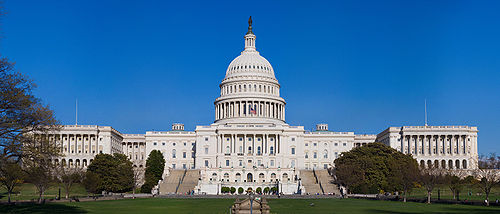
The western front of the United States Capitol...

Image via Wikipedia

No. 4 in a series on the Debt Crisis of 2011.

Here’s an American paradox, or maybe it’s a morality story. You work to pay your bills. I work to pay my bills, thereby maintaining the fiction that I’m solvent and creditworthy.

While you and I are working to pay our bills, right-wing zealots are conspiring to prevent the government of the United States of America from paying its bills. They even pretend that it would be right and good for the U.S. to ignore its debts.

The premeditated intent of these patriot-politicians is to subvert Congress and sabotage the U.S. Treasury, force financial default, and destroy America’s credit rating. With malice aforethought, they plan to run the U.S. government straight into bankruptcy and shut it down.

By bankrupting the Treasury, these people — the Tea Party, the Libertarians, the Anarchists, the tax protestors — hope to smash and destroy the government, and kill its hated programs and taxes. Then they will wave the American flag and celebrate.

Isn’t it sedition and treason to destroy from within the government of your own country?

Believers in this Tea Party and Libertarian conspiracy call themselves “Patriots.”  But aren’t they really traitors and turncoats?

— John Hayden

American Debt Crisis: Rich and Powerful Demand Total Victory over Middle Class and Poor

No. 3 in a series on the Debt Crisis of 2011.

President Barack Obama floated a trial balloon on the front page of the Washington Post on Thursday, in a long story that said the President is prepared to discuss cuts to both Medicare and Social Security. As the headline put it, Medicare and Social Security are “on the table,” otherwise known as the chopping block. No one quoted in the story was willing to have their name attached to the information.

In the whole, long newspaper story, the words “defense” and “defense cuts” were never mentioned. Not once. What? You mean Medicare and Social Security are on the table, but the elephantine defense budget is not? It’s not credible, not believable.

As Obama was supposedly preparing to sacrifice Medicare and Social Security, Republicans repeated their long-stated position: Tax increases for the rich are NOT “on the table.” Republicans allowed as how they might be willing to wheel and deal on tax breaks and loopholes, so long as the net effect is no increase in taxes on the rich.

Also yesterday, AARP, the largest organization representing senior citizens, made its position clear: The AARP opposes any cuts in Medicare and Social Security.

So, the lines are clearly drawn in the class war to divide up what’s left of the American Dream. The rich and powerful have made clear they will accept nothing less than total victory over the middle class and poor. President Obama hints he might be a willing accomplice in the cashing out of Medicare and Social Security. If so, it would be a presidential betrayal of the American people on a historic scale.

(If you cringe at the words class war, don’t forget that class warfare will probably be followed by generational warfare, pitting mother against daughter and grandfather against grandson. See “Divide And Conquer: The New Plan To End Social Security by Dividing America at 55.”)

Could President Obama possibly be serious about caving in to the rich and powerful on both Medicare and Social Security? Plus a player to be named later, Medicaid?

I hope the President is not serious. To balance the budget by cutting Medicare and Social Security for the middle class and the poor, while at the same time refusing to raise taxes on the rich by a single penny, would be a craven injustice. Remember, the rich are paying tiny taxes, compared to what they have paid historically, and their wealth continues to expand, in a continuing social transfer of assets from bottom to top.

In my opinion, there is nothing wrong with the American budget that could not be remedied by modest tax increases on the wealthy, accompanied by modest spending cuts in the defense budget. That’s what should be “on the table.”

I hope Obama floated this balloon simply to highlight how outrageous it would be to force the middle class and the poor to pay for the financial crisis created by the rich and powerful. In any event, the trial balloon provided an easy target for Democrats in Congress to shoot down.

Do you suppose that anyone is negotiating in good faith as the clock ticks down to financial default by the U.S. government?  If U.S. leaders fail to behave responsibly, the hard times ahead could test the fabric of American society like never before.

— John Hayden

American Debt Crisis: Whatever Happened to Jobs, Jobs, Jobs?

No. 2 in a series of quick-takes on the Debt Crisis of 2011. 

Today’s question: Whatever happened to the first and foremost issue of the 2010 election, JOBS?

Remember when every politician was chanting in unison: “Jobs, jobs, jobs!” That’s what they said, because that’s what the voters cared about. Jobs. But “Jobs, jobs, jobs!” was more a prayer than a promise.

All politics is local, remember, but the job market is now global. It is not within the power of locally elected politicians to create jobs in a global job market.

It is, however, within the power of politicians to kill jobs. Soon as the class of 2010 took residence in the governor’s mansions and state legislatures, they set about writing austerity budgets focused on two goals: Reduce spending and cut taxes. The way to reduce spending is to eliminate as many state programs and state jobs as possible. Wisconsin got the lion’s share of publicity for austerity, but nearly every state has joined the movement.

Now the focus has turned to Washington, where they’re busy cutting jobs on a larger scale. The debate is not over whether to cut the federal budget, but how deeply to cut. And where to cut.

The Republican Party is determined to cut the budget by gutting the hated “Entitlement Programs.”  They use the words, “Entitlement Programs” because they fear to say, “Medicare, Medicaid, and Social Security.”  The main budget target this year is Medicare for the elderly. Republicans hope, as soon as possible, to move on to cutting Medicaid and the most popular “Entitlement,” Social Security.

Keep your eye on the goal. Forget about Jobs, jobs, jobs! The attention span is short. Jobs, Jobs, Jobs! is over. That was last year’s goal.

The goal for 2011 is reducing the national debt. So they say. Spending cuts are the means to that end.

But the real goal is to reduce taxes for wealthy individuals and for corporations. Republicans plan to hand over to the wealthy and corporations, all the money saved by spending cuts. In a few years, presumably, Congress would begin to use some of the savings to actually reduce the debt. Possibly.

When pressed, Republicans say that the way to create Jobs, jobs, jobs! is by gifting large amounts of money to the wealthy and corporations, who would invest the money. Eventually, it might trickle down to the masses in the form of jobs.

Remember that wealthy people invest their money in corporations. As in,  “International Corporation” Or “Global Corporation.” So, even if you believe in trickle down, exactly where in the world do you suppose new jobs would be created?

In my opinion, any jobs resulting from U.S. spending and tax cuts would go to some developing  country offering cheap labor, far from the U.S.

America with no jobs and no Medicare will be a sad and dreary place.

The first post in this series on the American Debt Crisis is here. The next installment will be “Starve The Beast.”

— John Hayden

(Does a 525-word post qualify as a short-take?)

American Debt Crisis: A Cinder-Block Wall, Or A Screen Door?

No. 1 in a series on the Debt Crisis of 2011.

The American political deadlock over debt and taxes is an enigma. It’s a monster with too many heads. Starting today, I’m doing a series of blogging quick takes, each post only a few sentences, zeroing in on one question. No more windy dissertations.

Today’s question: Is the world as we know it about to end, if Democrats and Republicans can’t agree to raise the debt ceiling?

The sovereign debts of the U.S. and other countries are huge beyond comprehension. But what is their real import? In the 1980s, when “fiscally responsible” Republicans were digging the debt hole, they decreed that deficits no longer matter. Could that possibly be true?

Is the debt crisis being trumped-up for ideological purposes, to kill Medicare, or Social Security?

To be sure, debt exists on paper, as bonds and notes and bookkeeping entries. But what, if anything, does the paper represent? Is national debt a tangible reality, like wood; or an abstract concept, light as air?

Better check under the bed. Is anyone hiding there?

Remember Y2K? End of the world. Planes were going to fall from the sky. Approaching Y2K, it looked like a cinder-block wall, into which civilization was going to crash and burn.

Arriving at Y2K, we passed through it like air through a screen door.

— John Hayden

(Quick-take rating for this post: 215 words.)

Government Shutdown Feels Like Beginning Of The End For America

Human beings have created many empires in recorded history. Every one of them, from the Roman Empire, to the Ottoman Empire, to the British Empire, on which the sun never set — every great empire has failed.

And here we have the U.S. House of Representatives and the U.S. Senate on the brink of shutting down the government of the United States of America — ON PURPOSE!  If there were any logic, any sense in the world, closing the U.S. government would be treason.

Last time politicians shut down the government, in 1995, it was able to reopen in a few days with no more serious consequence than closing a few national parks.

However, there is no guarantee for the future.  The law of unintended consequences is in effect. We live in the 21st century, the century of the “Black Swan.” Major events, or chains of events, that are unpredictable and highly improbable can happen. You can learn more about the “Black Swan” here.

Politicians who would shut the U.S. government — on purpose! — are tempting fate. Our ancestors fought a Revolutionary War to establish this government. We fought a Civil War to hold the Union together. American soldiers died in foreign wars. And now modern politicians are willing risk throwing it all away over a budgetary dispute? Whatever the unintended consequences, Republicans and Democrats will share the dishonor equally.

We live in perilous times. The U.S. is embroiled in three foreign wars. We recently survived the worst worldwide financial crisis since the Great Depression, but many countries continue to struggle with economic and debt problems of dangerous proportions. Portugal is begging for a bailout by the European Union and the International Monetary Fund. Portugal is the third European nation to require financial rescue. Japan, after two lost decades of economic stagnation, has been driven to its knees by an epic earthquake. Its nuclear power plants spew radiation, poisoning Japan’s food and water.

Enemies wish to destroy us. We’re threatened by terrorists from abroad, and by homegrown terrorists. War might be unleashed at any time, in Yemen, or the Ivory Coast, or an attack from North Korea or Iran. India and Pakistan are always on the verge of war. So are the Israelis and Palestinians.

What’s my point? Events like a government shutdown can spin out of control. One unexpected consequence cascades into others, until the entire edifice trembles. Who could have predicted that a World Trade Center building might collapse? Both towers disappeared into rubble before lunch on a single day.

On top of all the dangers in the world, U.S. politicians are going to shut down the U.S. Government? For a few days? If politicians cannot agree to keep the government open this week, will they agree to reopen it next week? What if two weeks go by? Three? The longer the crisis continues, the more difficult it will be to end. Be afraid of the “Black Swan.”

Some remnant remains after an empire fails. Rome exists as a city to this day. The British islands remain a functioning nation, with shrunken power. The Mayan civilization left ruins. Descendants of the Mayan people live today throughout Central America.

North America will remain, and millions of people will live in the historical United States. Modern civilization will continue, probably. Beyond that, there are no guarantees for the U.S. as a nation. A federal shutdown  for more than a few weeks would force the states to fend for themselves. A shutdown could lead to default on the sovereign debt, or weakening of U.S. armed forces.

Once started, a process of devolution and decay may accelerate out of control, and who has power to stop the chaos?

— John Hayden

‘Democratic Revolution’ in Ireland

Irish General Election - Enda Kenny's Victory ...

Enda Kenny claims victory for Fine Gael at Burlington Hotel. By infomatique via Flickr

Countries with elected parliaments operate under a strict-constructionist interpretation of the “consent of the governed” clause.

Irish voters lashed out in economic pain this week, withdrawing their consent in no uncertain terms, and dismissing Ireland’s longtime ruling party, Fianna Fail. It may be a historic change election.

Enda Kenny, leader of the victorious Fine Gael party, called it a “democratic revolution.” See the Christian Science Monitor story.

Irish voters are incensed over the banking meltdown and the collapse of housing values — which left their country nearly bankrupt — and angry about bailouts by the European Union and International Monetary Fund.

Fine Gael is projected to win 75 seats in the Irish parliament, 8 seats short of a majority, according to the Christian Science Monitor. Relying on the revised consent of the governed, Mr. Kenny is expected to forge a coalition government with the Labour Party, projected to win 37 seats.

75 seats + 37 seats = consent of the governed

The consent of the governed is just so tenuously conferred, and is valid so long as the new coalition can dodge a vote of no-confidence.

For the long-powerful Fianna Fail party, consent was replaced by contempt. Fianna Fail was reduced from 77 seats to a woeful minority of 20. And the Green Party was wiped out, losing all 6 of its seats.

Exactly what the new ruling coalition will do differently is far from clear, but the voters are not pleased that their recent proud prosperity has been reduced to indebted austerity.  They believe that ordinary Irish citizens are not responsible for the economic collapse, but are  bearing the resulting hardship.

Mr. Kenny has indicated that he will attempt to renegotiate interest payments on the unpopular bailout.

Spectacular street protests against dictators in Egypt, Bahrain, and Libya have attracted far more news coverage in the U.S.  However, this Irish election is more relevant to the political mood and financial power struggles in the Western democracies. (It’s interesting that the Irish vote comes as Republican governors fight to inflict a strong dose of austerity in the U.S.)

I can’t wait to learn more about the transfer of consent in Ireland. What course will the Fine Gael-Labour coalition chart?

Whether Democrats and Republicans can discern anything of value regarding consent of the governed in the U.S. remains to be seen.

— John Hayden

Economic Crisis, Political Turmoil, Consent of the Governed


All governments depend on the consent of the governed. That’s what we learned in high school, so it must be true.


We’ll see how that works in the real world of the 21st Century. Does the consent of the governed matter, in the global economy? Or in a world with imaginary national boundaries, do governments depend more on the consent of multinational corporations?


The political and social consequences of the Great Recession are beginning to manifest, but the results are unpredictable. For background, see World Economic Crisis Phase II, Political and Social Upheaval.


In North Africa and the Middle East, massive street protests oppose long-established regimes. It looks to me like mob rule. The mobs appear to have power to topple dictators, but mobs cannot control the establishment of a new order. As the dictators fall, power can be seized by opportunists, regardless of character, ability, or ideology.


In the U.S., Wisconsin and other states are attempting to impose budget austerity and blunt the power of the public-worker unions. It looks like rule by legislative majority. But legislating is a messy business in the U.S. Power in a state is divided between the governor and the legislature, which is itself fractured into two houses.


In the example of Wisconsin, Republicans have control of state government following the 2010 election. The rowdy opposition by Democrats and unions will almost surely prove ineffective. The legislative majority will have its way. But under democracy as it has evolved in the U.S., does the legislative majority represent the people, or do the legislators represent corporations and special interests that bankroll their election campaigns? In a modern democracy, power can be purchased by opportunists.


Today’s national election in Ireland may provide a first reliable reading on the consent of the governed in the 21st Century.  You can listen to and read a PBS report here.


Ireland, you may recall, was one of the first European economies to be staggered by the bursting of world financial and housing bubbles. The Irish voters will probably pass judgment on the austerity measures taken in Ireland, and on the bailout efforts by the European Union and the International Monetary Fund.


Irish turnout is reported at 70 percent. The ruling party is expected to be ousted, but it will take about two days to count the votes.


There are so many other economic shoes waiting to drop. The debt problems of Europe, England, America, and Japan remain awesome and unresolved. We still have the possibility of default, or a chain of defaults in Europe, and among states in the U.S.


You want far-out scenarios regarding the consent of the governed? Consider the breakup of one or more major political structures.


If the USSR could break up, it could happen in the European Union, or even in the U.S.  The stability of Pakistan is not guaranteed. And speaking of stability, what about Saudi Arabia?


I could muddle on, wondering about the price of gold, or airline tickets, or $5 gas. But I just confuse myself more with every line I write. I must be watching too much Cable TV News.

See also,  You Say You Want a Revolution?

— John Hayden

Now You See It, And Now You Don’t: Social Security, Medicare, and Medicaid in a Shell Game

In honor of Tax Day

Image by swanksalot via Flickr

Welcome to the carnival. Watch closely . . .

The present attack  on entitlements and “debt” is setting the American people up for a deal from hell, a deal the devil thinks we can’t refuse. Just my opinion.

Here’s the devious strategy:

  1. All-out attack on “entitlements,” vilifying Social Security, Medicare, and Medicaid . . .
  2. Grudging acknowledgment that the financial structure of Social Security is not so bad . . . compared to the evils of Medicare and Medicaid . . .
  3. Target Medicare and Medicaid as the two programs that will surely sink America, leading to financial collapse . . . (China will rule the world!) . . .
  4. But wait! Maybe there’s a way out . . .

If the American people will agree to kill Medicare and Medicaid, the titans of finance will extend Social Security (for a little while)!

(Do you doubt this mid-February opinion that Republicans would be so callous as to destroy Medicare and Medicaid? See the Republican budget plan, issued at the end of March, to destroy Medicare and Medicaid, among other things.)

Attention old folks and future old folks! Listen up: You can survive without Medicare, right? We’ll keep sending you a diminished Social Security check (no cost-of-living increase). It’s a fair deal. You keep Social Security, we take Medicare. Everyone has to share the pain, right? This will only hurt a little.

It’s a deal you can’t refuse, old folks and future old folks. Or can you? Watch the little ball. Keep you eye on the shells. Now you see it, now you don’t.

If Republicans and their wealthy patrons can pull this off, it will be the biggest public relations coup since the invention of  “the death tax.” Democrats are taking the bait.

— John Hayden