Forgiveness of Student Loans Should Be THE Democratic Issue For 2014

Protecting Social Security and Medicare — the strong and fundamental safety net for older Americans — is a core mission of the Democratic Party and Democratic voters.

Equally important — it’s a moral obligation — is making sure we don’t leave younger generations bereft of opportunity and buried in debt. We must preserve hope for everyone from today’s elementary school children to today’s forty- and fifty- somethings.

President Obama’s call for quality early childhood education for all children gets us thinking in that direction. But what about today’s working adults, from age 21 to age 62? Too many will find themselves caught in the middle between the costly (privileged?) senior generation and the expensive (and essential!) younger children.

I’ve long been troubled by the accusation that preserving Social Security for today’s elders will lead directly to the indebtedness and impoverishment of our children and grandchildren. Continue reading

What If Debt Is Not The Problem?

Wipe our Debt

(Photo credit: Images_of_Money)

“As we return once again to our regularly scheduled program of ‘Crisis And Impasse,’ let’s take a moment to consider the following heretical idea: We have no debt problem.”

That’s the take-your-breath-away lead to a commentary by Zachary Karabell on the business section front of today’s Washington Post. Karabell gives a concise overview of the American debt debate from the time of Alexander Hamilton and Thomas Jefferson through William Jennings Bryan and the long-running confrontation over the gold standard, up to the present day. Continue reading

U.S. Congress Implodes; President Escapes To Hawaii

What a bizarre spectacle of irresponsible brinkmanship! The ultimate House and Senate votes may have narrowly averted immediate fiscal crisis and tax increases, but they do not restore one iota of confidence in the legislative branch of American government.

President Barack Obama, after failing to exert the leadership the American people hoped for, immediately boarded Air Force One to resume a Hawaiian vacation with his family. What can he be thinking?

To put the cherry on top of the whipped cream,   Continue reading

Returning Now To Our Regular Program, “The Fiscal Cliff”

Photo by John Hayden

It’s 10 days since I last posted on Work In Progress. The Earth continues to spin. Gen. John Petraeus and Paula Broadwell, et al., were pushed from the front pages by a deadly rocket battle between Israelis in Israel and Palestinians in Gaza.

Full-out war appeared imminent, according to cable TV news. But a ceasefire was called in time for Thanksgiving.  (Appropriate that it’s an American holiday. We have so much to be thankful for, compared to the rest of the world. And we take it all for granted.)

The waning of the Middle East crisis made room for a seasonal story: Walmart employees threatening to disrupt kickoff of the Christmas shopping frenzy. (Starting time for the frenzy advanced from Black Friday to Thanksgiving Day, henceforth to be known as Black Thursday.)

The Walmart protests fizzled, naturally. They had as much impact as Y2K. Walmart workers stand exposed as powerless against the energy of American consumerism.

Now we return to the dreaded “Fiscal Cliff,” at least until the next distraction. Be not faint-hearted! In the grand scheme of things, the fiscal cliff is a bump in the road.

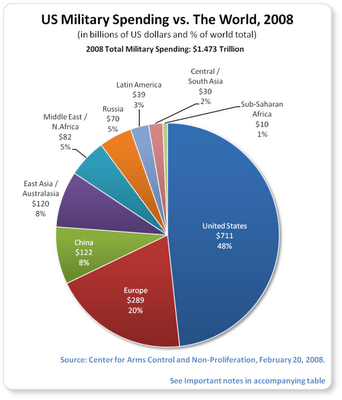
Most importantly, the fiscal cliff provides a unique opportunity to put the brakes on the runaway military-industrial defense complex.  Seize the day!    Continue reading

The Fiscal Cliff — Seize the Day, Cut Military Spending Now

The U.S. defense budget, worldwide military overreach, and the influence of the military-industrial complex — these are the root of America’s economic and debt crisis.

Not Social Security, not Medicare, not Medicaid, not government pensions, not anything else you want to label as “entitlements.”

Continue reading

How High Is A “Fiscal Cliff”? What Happens At The Bottom?

MAYBE THE FISCAL CLIFF LOOKS LIKE THIS sand dune in Ocean City, Maryland, after some serious pounding by Hurricane Sandy. A sudden drop off at the top, followed by a sloping hill of sand.

Ever notice how the terminology we apply to important issues in the public sphere can blow things all out of proportion. Continue reading

Better Off?

Question:  “Are you better off than you were four years ago?”

Answer: YES, Mr. ROMNEY, AS A MATTER OF FACT, WE ARE BETTER OFF THAN WE WERE FOUR YEARS AGO!

Four years ago, we were looking into the abyss. Four years ago, Wall Street and the banks were trembling. Four years ago, the American automobile industry was on the eve of destruction. Every job associated with the auto industry was about to go away. Forever. Four years ago, we were fighting two wars. No end in sight. Or was it three wars? It’s hard to remember. Four years seems like a long time. Hard to remember what it was like. It’s like a nightmare that we woke up from. A catastrophic plane crash that we walked away from. YES, the truth is, we are better off.

— John

This post from Femme Vitale raises thoughtful issues about tiny houses and freedom to live as you wish, with links for folks seeking more information. Tiny houses offer a practical way for people to cope with limits created by debt, job shortages, and slow economic growth. Maybe tiny houses will change the size of the American Dream. Zoning laws need to be updated to provide places for tiny houses, preferably mixed in with housing of other sizes. Add major improvements in public transportation, and the future suddenly looks quite appealing. — John Hayden

dreamrly's avatarFemme Vitale

Lately, I have been extremely discouraged by what I believe are very critical challenges facing my generation. One of the primary challenges I see is the crippling amount of debt accumulated by the average American college graduate in times of intense competition for work. In this climate in which individuals step out into the world with tens of thousands of dollars of debt, the dream of owning a home can seem impossible, even with a decent job. Furthermore, the prospect of taking on a huge mortgage, working for years just to pay off the interest, and paying off the home just in time for retirement  is not especially appealing. Because we live in a society that is becoming more and more nomadic, and because children rarely choose to live where they were raised, working an entire life just to pay off a mortgage does not, in essence, better the next…

View original post 564 more words

‘Responsibility’ is Key to World Economic Crisis

Is the present generation willing to accept the simple responsibility of paying its bills?

Or will we refuse to pay? That’s what it all comes down to, isn’t it?

The Roberts decision upholding the Affordable Care Act turned the spotlight on RESPONSIBILITY.  The effect of the High Court decision is to require that people of means take responsibility for buying their own health insurance. Some view that as an unreasonable request.

The decision also leaves a central question open to debate. Will society accept responsibility for the health care costs of the poor? The High Court’s position on Medicaid essentially requires each state to decide whether it will accept responsibility for its poor citizens. (A related question is: Can individuals act responsibly to preserve their own health?)

On the world economic stage, the crisis in Europe also spotlights responsibility.

Continue reading

Quote

“Bring on the populist battle we have been waiting for. The 1% vs the 99%.”

Jonathan Taplin

Jonathan Taplin (Photo credit: Wikipedia)

The quote is from Jon Taplin. Everyone who’s serious about the 2012 election and the continuing economic crisis would  probably appreciate his blog at http://jontaplin.com. I know his savvy essays have helped me understand what a political and economic predicament we’re in.