sub rosa racism. I’ve been casting about for a way to explain the great divide in American politics. Thanks to Jonathan Yardley, a Washington Post book critic, for getting to the root of the problem: sub rosa racism. I looked up “sub rosa.” Sure enough. I’m thinking sub rosa racism explains most of the anger in American politics. Simple economics explains the rest.
Author Archives: Editor (Retired)
Worshipping False Gods — Americans Bow Before Business
Americans worship at the altar of BUSINESS.
The faith was renewed at the Republican Convention. Nearly every speaker gave praise to BUSINESS, voicing both devotion and reverence. Blessed be BUSINESS.
The delegates, all devout practitioners of BUSINESS, rose to their feet and clapped their hands in spontaneous outbursts of adoration. Many are converts from the wretched status of employee. They were more than willing to share their testimony — how they broke free from the chains of sin and employment, overcame great adversity, and gained salvation through BUSINESS.
Speaker after speaker repeated variations on the central dogma, that everything good flows from BUSINESS. Only those who join the church of BUSINESS and diligently practice BUSINESS shall be blessed with prosperity all their days. Their children and their children’s children shall inherit the riches of the Earth. Nor shall they fear the Death Tax. Continue reading
Business Owners Only
Based on the rhetoric, I conclude that all delegates to the Republican convention in Tampa were business owners. Specifically, men and women who built their businesses themselves, from scratch, with their bare hands. Proud people! Independent people who neither need nor accept help, not from God or anybody. The delegates do acknowledge, however, the positive influence of their parents — impoverished immigrants all — who sacrificed everything so the next generation could be free, business-building Americans. Also allowed on the convention floor were qualified spouses, those who stay at home for the benefit of their home-schooled children.
— John
Related articles
- Small Business Owners – Choose Your Movement! (grasshopper.com)
- Ohio governor John Kasich to African-Americans: ‘Come off the streets’ to become small business owners (thegrio.com)
- Entrepreneurship Front & Center at Republican National Convention (inc.com)
- Business Owners’ Financial Orientation Differs from Non-Business Owners’, New Research Shows (kauffman.org)
- Are Small Businesses Being Heard This Election Year? (news.terra.com)
- You Didn’t Build That! – Obama’s Message to Business Owners (theprintblog.com)
Better Off?
Question: “Are you better off than you were four years ago?”
Answer: YES, Mr. ROMNEY, AS A MATTER OF FACT, WE ARE BETTER OFF THAN WE WERE FOUR YEARS AGO!
Four years ago, we were looking into the abyss. Four years ago, Wall Street and the banks were trembling. Four years ago, the American automobile industry was on the eve of destruction. Every job associated with the auto industry was about to go away. Forever. Four years ago, we were fighting two wars. No end in sight. Or was it three wars? It’s hard to remember. Four years seems like a long time. Hard to remember what it was like. It’s like a nightmare that we woke up from. A catastrophic plane crash that we walked away from. YES, the truth is, we are better off.
— John
Related articles
- See, I Told You So: Obama Says He Wants to Repeat Auto Takeover in Every Industry (rushlimbaugh.com)
- Inside Detroit’s Growing Startup Scene (techli.com)
- Accomplishments? (politicalirony.com)
Anne Tyler’s Excellent Paragraph(s)

ANNE TYLER
I know, I know. I’ve bogged down in two treacherous subjects. Politics (boring) and economics (more so). This political-economic obsession can only lead to dystopia, which is a particularly virulent strain of paranoia. Dystopia-paranoia flu is spreading quickly. Scientists worry about a pandemic.
There’s no known cure, but a good novel about human beings and their foibles couldn’t hurt. (You might also try a bowl of chicken soup.) If it’s foibles you want, Anne Tyler is the leading specialist. As Exhibit A, I submit the following paragraph from her latest book, The Beginner’s Goodbye.
Overproduction & Excess Supply of Everything — Except Food
Quote
“My greatest fear is that much of the world could devolve into a dystopian nightmare in which increasing productivity brought on by automation and a global labor arbitrage crashes up against a reality of an overstretched global middle class no longer hungry to spend their every waking hour at the mall or the car dealership. This global goods glut arrives at the very moment that a combination of climate change, population growth and senseless farm policies have led to a potential global food crisis.”
The above quote is from Jon Taplin’s blog. If you’d like to know which way the wind is blowing at this bizarre point in history, you could read Jon Taplin.
Taplin calls the puzzling time in which we live “The Interregnum.”
— John Hayden
Related articles
- We’ll make a killing out of food crisis, Glencore trading boss Chris Mahoney boasts (sott.net)
- We are teetering on the brink of another global food crisis (guardian.co.uk)
- US Drought Could Spell Another Global Food Crisis (motherjones.com)
- New global food crisis and catabolic collapse (3eintelligence.wordpress.com)
- Forget the fiscal cliff, food is the real crisis (business.financialpost.com)
- Dire warning over global food crisis (sott.net)
This post from Femme Vitale raises thoughtful issues about tiny houses and freedom to live as you wish, with links for folks seeking more information. Tiny houses offer a practical way for people to cope with limits created by debt, job shortages, and slow economic growth. Maybe tiny houses will change the size of the American Dream. Zoning laws need to be updated to provide places for tiny houses, preferably mixed in with housing of other sizes. Add major improvements in public transportation, and the future suddenly looks quite appealing. — John Hayden
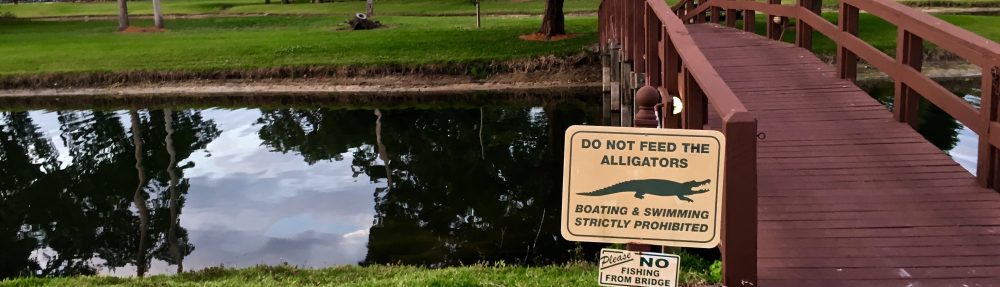
Lately, I have been extremely discouraged by what I believe are very critical challenges facing my generation. One of the primary challenges I see is the crippling amount of debt accumulated by the average American college graduate in times of intense competition for work. In this climate in which individuals step out into the world with tens of thousands of dollars of debt, the dream of owning a home can seem impossible, even with a decent job. Furthermore, the prospect of taking on a huge mortgage, working for years just to pay off the interest, and paying off the home just in time for retirement is not especially appealing. Because we live in a society that is becoming more and more nomadic, and because children rarely choose to live where they were raised, working an entire life just to pay off a mortgage does not, in essence, better the next…
View original post 564 more words
Raise the Social Security Retirement Age? Huh?
Demonstration in Barcelona on January 22 against raising the retirement age (Photo credit: Wikipedia)
People are living longer, therefore the U.S. needs to raise the Social Security retirement age.
The above statement fills me with despair. It can be spoken with a straight face only by a young person or a rich person who doesn’t understand: a) What it feels like to be sixty-something in the 21st century, and b) The place of the American worker in the market for human labor, given the new-normal, flat-world economy.
Full disclosure: I come at this retirement age question from a Baby Boomer point of view. I celebrated (?) a 64th birthday in June. For which I’m grateful. It means I’m one of the survivors. I am now enjoying my 65th summer on the planet Earth, which is one of my favorite planets.
Dead Broke
Aside
This just in: Nearly half of older Americans have a net worth of less than $10,000 when they die.
Darkness in India, Drought in America; You Can’t Make This Stuff Up
The power grid in India failed this week, leaving half the population of the world’s largest democracy without electric power.
Half the counties in America have been declared drought disaster areas by the U.S. Department of Agriculture.
Half of India in the dark, half of America in drought. Makes you wonder: Where is the tipping point? How much failure can a country endure?